Order fulfillment Services

Amazon Fulfillment for FBA, FBM & SFP Sellers

Selling on Amazon means playing by Amazon's rules. 

We know them well.

a2b Fulfillment graphic highlighting Amazon order fulfillment and logistics services.
800k sq ft
Warehouse space
4
US facilities
3
Geographic regions
25+ years
In business

Overview of Amazon Fulfillment Programs

Amazon sellers have three primary fulfillment channels available to them. Understanding which option, or combination 
of options, fits your business is the starting point for a smart Amazon fulfillment strategy. a2b supports all three.

Fulfillment by Merchant (FBM)

FBM means you, or your fulfillment partner, ship Amazon orders directly to customers under your own brand. You keep control of your inventory, your packaging, and your customer data. a2b takes on the day-to-day responsibilities of picking, packing, and shipping on your behalf, with automated order import and tracking sync directly with Amazon.

Seller Fulfilled Prime (SFP)

SFP allows approved Amazon sellers to fulfill orders directly while still displaying the Prime badge. The requirements are strict: same-day shipping six days a week and delivery in 1-2 days. Your customers expect Prime-level delivery speed, and a2b's robust fulfillment network of four fulfillment centers is purpose-built to meet those standards.

Fulfillment by Amazon (FBA)

With FBA, you send inventory to Amazon in bulk, and Amazon fulfills individual orders. a2b handles FBA prep: labeling and barcoding to Amazon's specifications, polybagging, bundling, kitting, and shipping to Amazon fulfillment centers. We also manage your Vendor Central portal if needed.

Compliance and Labeling Support

Amazon has specific labeling, packaging, and shipping requirements for every fulfillment program. Getting them wrong costs you in the world of Amazon; delays, inventory holds, and account flags are the result. a2b maintains retailer-specific SOPs for each Amazon channel so your products are always processed to spec.

For FBA shipments, we apply FNSKU labels, polybagging, and bundling exactly to Amazon's guidelines before inventory leaves our facility. Our QC team verifies compliance before every shipment goes out, and for FBM and SFP, we generate compliant shipping labels and packaging documentation automatically at the time of fulfillment.
‍

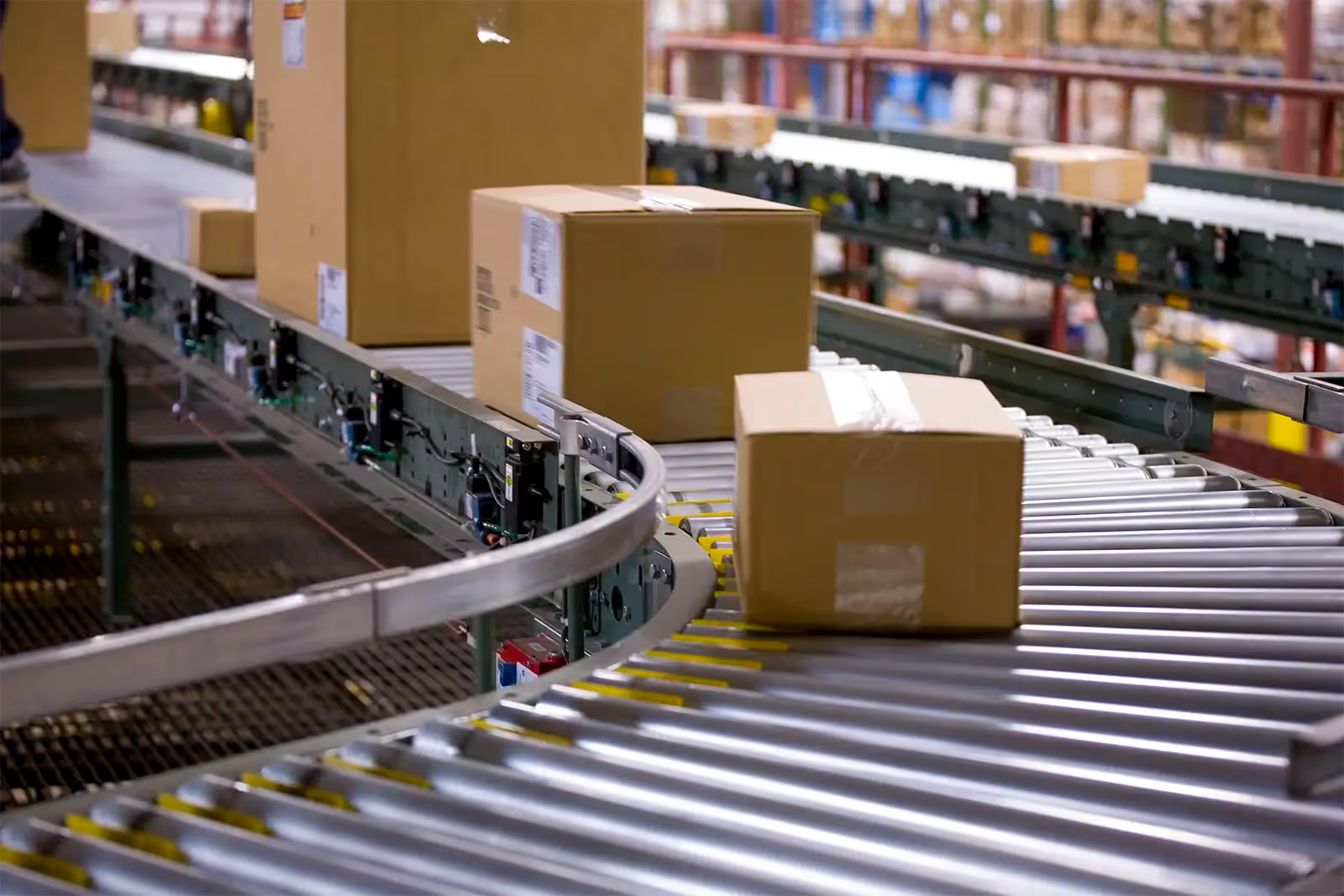
Packages move through on a conveyor belt in a supply chain process for fulfillment and delivery.

How Amazon Fulfillment Works with a2b

Whether you're fulfilling FBM, SFP, or sending goods to Amazon FBA, the workflow with a2b is automated and accurate. Here is how a direct fulfillment order moves through our system.
01
Order Placement
Customer orders are placed on Amazon and automatically routed to a2b.
02
Order Import
a2b pulls the order directly from Amazon via automated integration, or from your system if preferred.
03
Warehouse Selection
Our DOM engine (Distributed Order Management) selects the optimal fulfillment center based on inventory location and the customer's destination.
04
Inventory Allocation
Inventory is allocated and your reporting dashboard updates in real time.
05
Order Processing
Orders are processed using automation, robotics, and voice picking for speed and accuracy.
06
Packing
Items are packed into right-sized packaging to minimize cost, waste, and damage.
07
Quality Control
Rigorous QC checks occur at multiple points before shipment.
08
Shipping
Real-time rate shopping routes orders through the optimal carrier and delivery stations for every shipment.
09
Amazon Sync
Tracking data and inventory levels sync back to Amazon automatically.

Benefits of Fulfilling Amazon Orders With a2b

Many Amazon sellers default to FBA without fully evaluating the trade-offs. Fulfilling directly with a2b via FBM or SFP gives you control and flexibility that FBA alone cannot provide.
Brand control
FBM and SFP shipments carry your brand on the label and packaging, not Amazon's. Build customer recognition and loyalty with every delivery.
Inventory flexibility
With FBA, your inventory is locked in Amazon's warehouses and unavailable for other sales channels. Fulfilling with a2b keeps one inventory pool available for Amazon, your website, B2B orders, and every other channel simultaneously.
Lower storage costs
Amazon storage rates fluctuate with the holiday season and peak periods, increasing significantly when you need space most. a2b’s storage rates are not only less costly, but remain consistent all year long.
Prime eligibility
Our team continuously develops new skills and expertise to meet Amazon's evolving requirements. Through SFP, a2b's ground shipping network reaches over 95% of U.S. households in 1-2 days, meeting Amazon's Prime delivery standards without routing inventory through Amazon's system.
Transparent pricing
a2b's pricing is competitive and upfront. No surprise surcharges, no seasonal penalty fees.
a2b helps us maintain our Seller Fulfilled Prime badge by consistently shipping same day. So glad we found them.

Easy 3PL Integrations

We're plugged-in with popular platforms.

Frequently Asked Questions

What is Fulfillment by Amazon (FBA)?

Fulfillment by Amazon (FBA) is Amazon's third-party fulfillment offering. When you sell on Amazon and utilize FBA, Amazon warehouses your inventory and then picks, packs, ships, and handles customer service for Amazon orders. In exchange, you pay storage and fulfillment fees. An alternative to using FBA is to enroll in the Fulfillment by Merchant (FBM), or Seller Fulfilled Prime (SFP) programs, where you, or your 3PL partner, fulfills Amazon orders directly to the consumer. The latter keeps inventory flexible for other channels and brand control intact.

What are the requirements for Fulfillment by Amazon (FBA)?

Amazon FBA requires sellers to prep inventory to specific standards before shipping to Amazon's fulfillment centers. This includes FNSKU labeling, polybagging for applicable products, proper bundling, and compliance with Amazon's packaging and weight guidelines. Shipments must be routed through Amazon’s Seller Central portal, be shipped at the merchant’s expense, and arrive within the designated receiving window.

What are the pros and cons of using Fulfillment by Amazon (FBA)?

Pros include fast shipping and delivery, low shipping fees, and Prime badge assignment to items in the FBA network. Brands that wish to take advantage of these pros can leverage a2b’s experience in FBA prep and ship services.  

Cons include the need to prep and ship inventory to Amazon, limits on how much can be shipped to Amazon, potentially higher storage and fulfillment costs versus a traditional 3PL, including elevated peak storage fees, unpredictable changes to fee structures (vs service/storage rate commitments from a2b), and loss of shipment branding control. Brands that are concerned about these cons should explore the FBM and SFP programs, which a2b can service and support.

How do you get your product fulfilled by Amazon?

To use FBA, you create a shipping plan in Amazon Seller Central, label and prep your inventory to Amazon's specifications, and ship it to the designated Amazon fulfillment center. Once received, Amazon lists the inventory as Prime-eligible and handles fulfillment. a2b handles every step of the prep and shipping process, so you simply send inventory to us, and we take it from there.

Which is better, FBA or FBM / SFP?

Neither is universally better. FBA is simpler to manage and automatically qualifies listings for Prime, but it ties up inventory in Amazon's system and charges unpredictable storage fees. FBM keeps inventory flexible, preserves brand control, and avoids Amazon's storage fees, but requires a fulfillment partner that can meet Amazon's speed requirements. Many sellers use both: FBA for high-velocity items and FBM or SFP through a2b for everything else. We can help you evaluate which mix makes sense for your business.

Ready to Get More Out
of Your Amazon Business?

Selling on Amazon takes real work. Keeping your account in good standing, your inventory flexible, and your brand intact takes a fulfillment partner that knows the platform. a2b has supported Amazon sellers across FBM, SFP, and FBA for years, and we know what it takes to do it right.

We handle the shipping so you can focus on growing your business.

Talk to a specialist