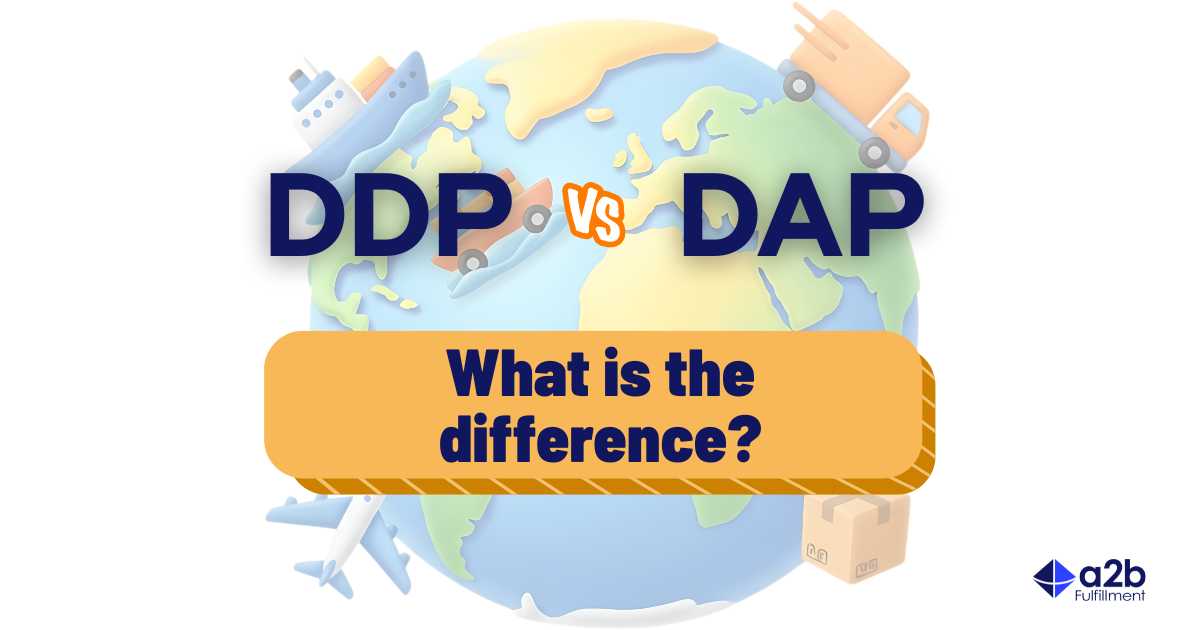


Understanding international shipping terms can be tricky. However, knowing the key Incoterms® is important for a smooth and cost-effective process. You will encounter the two most common terms in cross-border trade: Delivered-at-Place (DAP) and Delivered-Duty-Paid (DDP).Choosing the right one affects everything from cost and risk to customer satisfaction.
This guide will break down the essential differences between DAP and DDP, helping you determine the best approach for your business. We will look at how each term assigns responsibility for costs, risks, and customs. This will help you make a smart choice for your international shipments.
What Do DAP and DDP Mean in Shipping?

DAP and DDP are two of the 11 Incoterms® rules established by the International Chamber of Commerce (ICC). These rules are known worldwide. They explain the duties of sellers and buyers in the delivery of goods under sales contracts. They clarify who pays for what and when risk transfers between parties.
Delivered-at-Place (DAP) means the seller is responsible for delivering the goods to a named destination. The seller covers all costs and risks associated with transporting the goods to this point, but not for unloading. Under the DAP Incoterms, the buyer must handle import customs clearance. The buyer is also responsible for paying any duties and taxes.
Delivered-Duty-Paid (DDP) represents the seller's maximum obligation. With DDP shipping, the seller covers all transportation costs, export and import clearance, and customs duties and taxes. The seller’s responsibility only ends when the goods are available to the buyer at the destination, ready for unloading. This is often referred to as delivered duty paid.
Both terms are commonly used in international B2B transactions. They are also crucial for cross-border eCommerce, where seamless delivery is essential.
The Main Difference Between DAP and DDP
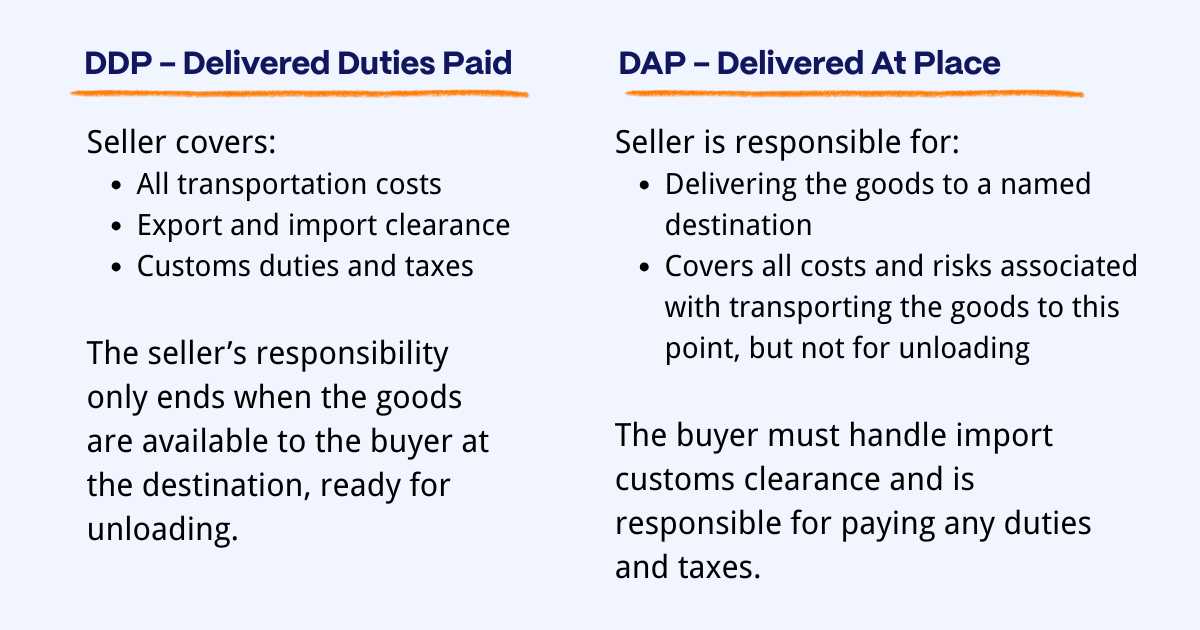
The fundamental difference between DAP and DDP lies in who bears the responsibility for import duties, taxes, and customs clearance. This single distinction has significant implications for both the seller and the buyer.
Under DAP, the buyer is the importer of record. Once the shipment arrives in the destination country, the buyer must handle the customs formalities and pay any import tariffs and taxes levied by local authorities. The seller's financial and logistical obligations end just before the goods are cleared through customs.
Conversely, with DDP, the seller assumes all responsibilities. The seller not only arranges and pays for transportation but also acts as the importer of record, managing all customs procedures and paying the customs duty. This all-inclusive approach means the buyer receives the goods with no additional hidden fees.
Consider a U.S. company shipping goods to a customer in France. With DAP, the U.S. seller delivers the goods to a French port or terminal. The French buyer would then be responsible for clearing them through customs and paying the EU's Value Added Tax (VAT) and any import duties. With DDP, the U.S. seller would handle everything, including paying the VAT and duties, and delivering the goods directly to the buyer's doorstep.
Are There Cost Implications for Sellers and Buyers?
The choice between DAP and DDP directly impacts the financial responsibilities of both parties. Under DAP, the buyer bears all import costs, including duties, taxes, and any fees associated with customs clearance. This can lead to unexpected expenses for buyers who are not prepared for these charges, potentially causing frustration and delaying delivery.
For sellers, DAP simplifies pricing, as they do not need to calculate and incorporate foreign taxes into their initial quote. However, the potential for surprise costs on the buyer's end can create a negative customer experience, which may harm long-term business relationships.
Under DDP, the seller is obligated to pay all costs, including the import duty paid and taxes. This requires the seller to accurately calculate these charges upfront and include them in the final price. While this adds complexity to the seller's process, it provides the buyer with a clear, all-inclusive price.
This transparency is a significant advantage in B2C eCommerce, as customers appreciate knowing the total cost at checkout without facing surprise fees upon delivery. For sellers, absorbing these costs into the pricing strategy is essential for protecting profit margins when using the DDP Incoterm.
Risk and Responsibility Allocation Explained
The allocation of risk is another critical element defined by Incoterms. For both DAP and DDP, the seller bears the risk of loss or damage to the goods during transit until they arrive at the named destination. However, the point at which customs-related risks are transferred differs.
With DAP, the risk transfer to the buyer occurs before customs clearance. If a shipment is delayed, inspected, or held at customs, itis the buyer's responsibility to resolve the issue. This gives buyers more control over the import process, which can be beneficial for experienced importers who have established relationships with local customs brokers.
Under DDP, the seller retains all risk until customs clears the goods and the buyer receives them at the final destination. If goods sustain damage, get lost, or experience delays before final delivery, the seller takes responsibility. This includes issues during customs inspection.
Insurance considerations also vary. Sellers must ensure goods in transit under both terms.
However, sellers using DDP may want better coverage. This coverage should include potential customs delays or problems. Buyers using DAP should ensure they have coverage for the import leg of the journey and any storage fees that might accrue during customs clearance.
When Should You Choose DAP?
DAP is a good choice for sellers. It helps them reduce their paperwork and liability in the destination country. It is especially good for B2B transactions.
This is true when the buyer is an experienced importer. They should know the customs rules of their country.
Advantages for the Seller:
- Simpler Logistics: The seller is not responsible for navigating the complexities of foreign customs.
- Reduced Liability: The seller avoids the risk of miscalculating duties or facing unexpected import regulations.
- Less Paperwork: The buyer handles all import documentation.
Limitations:
- Poor Customer Experience: The buyer may be surprised by unexpected duties and taxes, leading to dissatisfaction.
- Potential for Delays: If the buyer is unprepared to handle customs, deliveries can be delayed, and storage fees may apply.
DAP works best when the buyer has the expertise and willingness to manage the import process efficiently.
When Should You Choose DDP?
DDP is the best choice for businesses seeking to deliver a great customer experience. This is especially true in B2C and eCommerce. By offering an all-inclusive price, sellers remove friction and uncertainty from the buying process.
Advantages for the Buyer:
- Price Transparency: The price paid at checkout is the final price, with no surprise fees.
- Convenience: The buyer does not have to deal with customs, paperwork, or unexpected payments.
Challenges for the Seller:
- Increased Complexity: The seller must understand and comply with the import regulations of the destination country.
- Financial Risk: The seller is responsible for accurately calculating and paying all duties and taxes.
Advantages of Using a 3PL for DDP
- Expertise in International Logistics: A third-party logistics provider like a2b Fulfillment brings specialized knowledge and experience in managing complex shipping requirements across borders.
- Reduced Burden for the Seller: By partnering with a 3PL, sellers can offload the intricacies of customs clearance, duties calculation, and last-mile delivery, allowing them to focus on core business operations.
- Enhanced Compliance: 3PLs are well-versed in complying with various international customs regulations, minimizing the risk of delays, fines, or shipment rejections.
- Scalability: Leveraging a 3PL allows businesses to adapt more efficiently to fluctuations in order volume and expand into new markets with confidence.
DDP shipping requires sellers to have robust logistics capabilities or work with knowledgeable partners who can manage international customs. It is the gold standard for customer-centric international shipping.
DDP is the best choice for businesses that want to give a great customer experience. This is especially true in B2C and eCommerce. By offering an all-inclusive price, sellers remove friction and uncertainty from the buying process.
Advantages for the Buyer:
- Price Transparency: The price paid at checkout is the final price, with no surprise fees.
- Convenience: The buyer does not have to deal with customs, paperwork, or unexpected payments.
Challenges for the Seller:
- Increased Complexity: The seller must understand and comply with the import regulations of the destination country.
- Financial Risk: The seller is responsible for accurately calculating and paying all duties and taxes.
DDP shipping requires sellers to have robust logistics capabilities or work with knowledgeable partners who can manage international customs. It is the gold standard for customer-centric international shipping.
DAP Vs. DDP: Which Is Right for Your Business?
Choosing between DAP and DDP depends on your business model. It also depends on your customers' expectations and your comfort with risk and complexity.
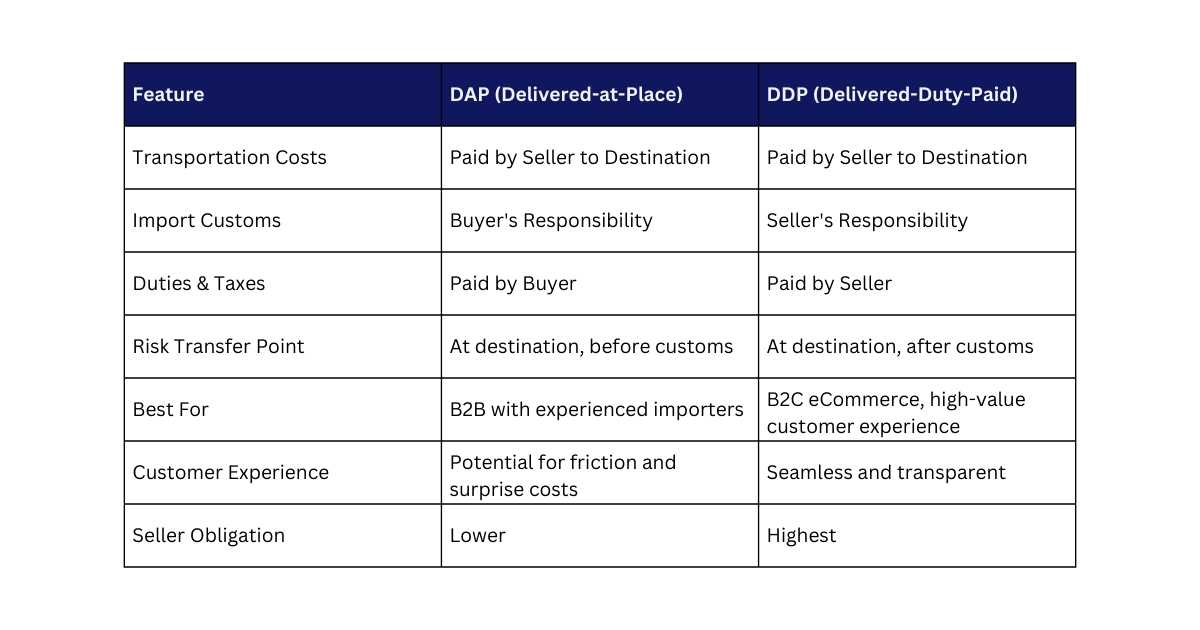
In summary, DDP is usually the best choice for customer satisfaction and loyalty. It offers a smooth and clear delivery experience. While it places a greater burden on the seller, the competitive advantage it offers can be significant.
DAP is a simpler option for sellers. It works well for experienced commercial buyers. These buyers like to handle their own import logistics.
Navigating the complexities of international fulfillment can be challenging. To ensure your shipping strategy aligns with your business goals and customer expectations, it is essential to have an expert partner by your side.
Contact a2b Fulfillment today to receive expert guidance on your international logistics and discover how our fulfillment solutions can optimize your supply chain.