

The holiday peak is a thrilling, stressful, and defining period for any growing e-commerce brand. You’ve planned your inventory, dialed in your marketing, and braced your team for the sales rush. But what about the other side of the peak? The inevitable wave of post-holiday returns can quickly turn record-breaking revenue into operational chaos. Don’t let returns derail your holidays—when managed correctly, they can become a powerful engine for customer loyalty and growth.
This year, the returns landscape is shaping up to be more complex than ever. A combination of economic pressures and evolving consumer behaviors is creating a perfect storm. For direct-to-consumer (DTC) brands in apparel and consumer goods, understanding these dynamics is the first step toward building a resilient returns strategy. This post will break down the key trends for 2025, quantify the potential impact on your business, and provide an actionable roadmap to turn this challenge into a competitive advantage.
The Macro Drivers Behind the 2025 Return Tsunami
Several powerful forces are converging to make the upcoming holiday season a record-breaker for returns. It’s not just about higher sales volumes; it’s about how and why customers are buying and returning.
Economic Headwinds and Consumer Caution
Lingering inflation continues to make consumers more discerning. While they are still spending, they are also more likely to experience buyer's remorse or seek out the best possible deal. This financial scrutiny means that any product that doesn’t perfectly meet expectations is coming back. Shoppers are less willing to "just keep" an item that isn't quite right.
The Ever-Expanding Holiday Shopping Window
Black Friday is no longer a single day. Sales events now start as early as October, stretching the purchase-to-return window well into the new year. An item bought on November 1st might not be returned until late January. This prolonged timeline creates a sustained, rather than a concentrated, returns surge that can strain warehouse resources for weeks on end.
Social-Driven Gifting and "Buy Now, Pay Later" (BNPL)
Platforms like TikTok and Instagram are major drivers of gifting trends. However, viral products often lead to impulse buys and gifts that miss the mark, resulting in higher return rates. Simultaneously, the widespread adoption of BNPL services makes it easier for customers to purchase multiple items with the intent to return some. This behavior lowers the financial barrier to buying, but it artificially inflates initial sales figures and guarantees a higher volume of returns.
The Rise of "Bracketing" in Apparel
For apparel brands, "bracketing"—the practice of buying multiple sizes or colors of the same item to try on at home—is at an all-time high. It’s the consumer’s way of recreating the fitting room experience. While it helps secure a sale, it also means that for every one item kept, one, two, or even three items are sent back, dramatically increasing reverse logistics volume.
Data-Forward Projections: What to Expect in 2025

While exact figures will vary by industry and brand, we can use benchmark data to forecast the scale of the upcoming returns season.
Illustrative 2025 Holiday Return Projections:
- Overall Return Rate: Expect an average return rate of 20-25% of total holiday sales volume, up from previous years. For some categories like fashion and footwear, this could climb as high as 35-40%.
- Peak Return Week: The first full week of January will remain the peak, with an anticipated 40% increase in return initiations compared to the 2024 peak.
- Cost Per Return: The average cost to process a single return is projected to reach $28-$35 when factoring in shipping, labor, and potential value loss.
- Bracketing Impact: For every $100 spent on a bracketing-heavy apparel order, expect to process a return worth $50-$75.
These aren't just numbers on a spreadsheet; they represent real costs and operational burdens that can erode your hard-earned holiday profits.
The True Cost of Unmanaged Returns
The impact of returns extends far beyond shipping labels. It's a multi-faceted drain on your resources, profitability, and customer relationships.
The Crushing Weight of Reverse Logistics Costs
Every returned package triggers a cascade of expenses. This includes the cost of the return shipping label, the labor to receive and open the package, inspect the item, and decide its fate. These costs add up quickly, directly eating into the margin of the original sale.
Lost Value: Refurbishment and Resellability
An item's value begins to degrade the moment it leaves your warehouse. By the time it’s returned, its condition may prevent it from being sold as new.
- Refurbishment: Does it need steaming, cleaning, or repacking? These are added labor costs.
- Resellability: Can it be restocked as A-grade inventory? If not, it must be routed to a secondary channel (outlet, liquidation) at a significant discount, often for pennies on the dollar.
- Total Loss: In some cases, the item is damaged beyond repair and becomes a complete write-off.
The Strain on Customer Support
A confusing or slow returns process inevitably leads to an influx of customer service tickets. "Where's my refund?" is a common and time-consuming query. Each ticket pulls your support team away from helping customers with sales-generating activities, driving up support costs and lowering team morale.
Identifying Your Operational Bottlenecks
Where does the process break down? For most DTC brands, the pain points are predictable and severe during peak season.
- RMA Creation: Is your returns portal clunky or difficult to find? Manual RMA (Return Merchandise Authorization) approvals create delays and frustrate customers.
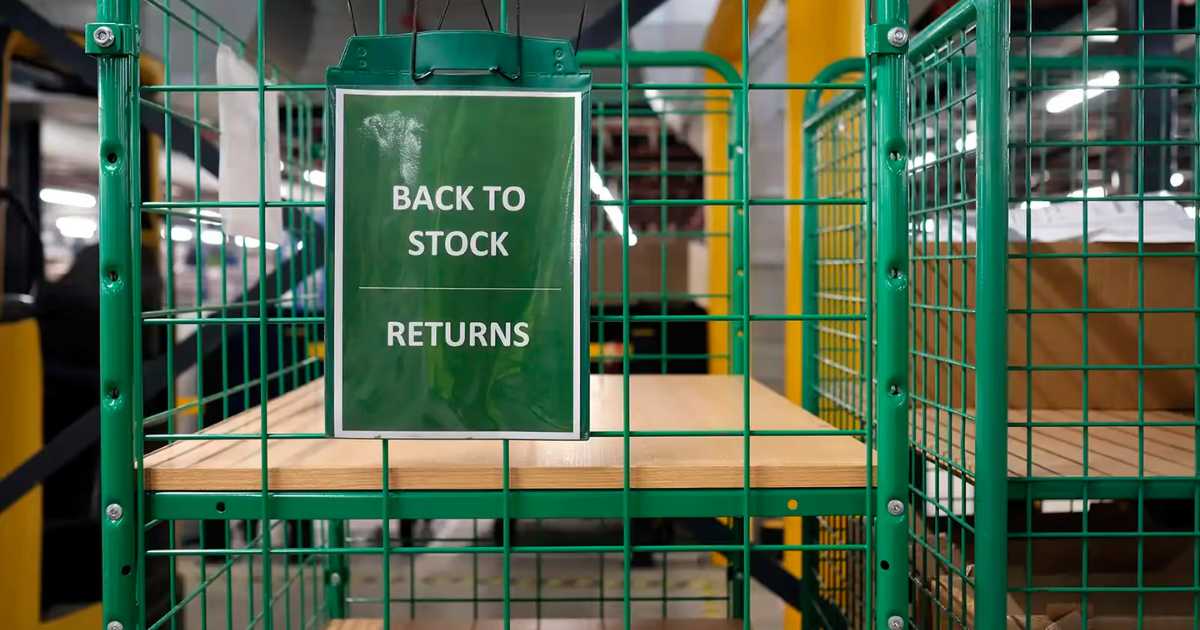
- Receiving & Triage: A pile-up of unsorted boxes on the warehouse floor is a common sight. Without an efficient system, your team wastes precious time just figuring out what’s inside each package.
- Grading & Disposition: Inconsistent grading standards lead to errors. An item that should be restocked gets liquidated, or worse, a damaged item is put back on the shelf for another customer to receive.
- Restocking & Exchanges: The time it takes for a returned item to become available for sale again (cycle time) can be days or even weeks. This delay ties up valuable capital and leads to stockouts on popular items, especially when a customer is waiting for an exchange.
Ultimately, these bottlenecks damage the customer experience. A slow refund or a botched exchange can erase all the goodwill you built during the sale, putting future loyalty at risk.
A Strategic Roadmap for Turning Returns into a Win
You don't have to be a victim of the return tsunami. By implementing a clear operational strategy, you can mitigate costs, improve efficiency, and even enhance customer loyalty. This is where leveraging a third-party logistics (3PL) partner can be a game-changer.
A sophisticated 3PL doesn't just store and ship your products; they provide a comprehensive reverse logistics solution. Here’s a preview of how a 3PL can transform your returns process:
- SLA-Backed Processing: A 3PL commits to Service Level Agreements (SLAs), guaranteeing that returns are checked in and processed within 24-48 hours of arrival.
- Automated, Branded Portals: They provide self-service return portals that integrate with your store, offering customers an easy way to initiate returns and exchanges.
- Efficient Labeling and Routing: Systems can automatically generate return labels and use regionalized hubs to reduce shipping time and cost.
- Rules-Based Grading: You can set automated rules for grading items (e.g., "if SKU is X and returned with tags, disposition to A-grade"), ensuring consistency and speed.
- Integrated Recommerce Channels: A 3PL can seamlessly route B-grade items to resale or liquidation channels, maximizing value recovery.
- Exchanges-First Workflows: They can prioritize exchanges by using Instant Exchanges or shipping the new item as soon as the return is in transit.
- Proactive Communications: Automated emails keep customers informed about their refund status, reducing support tickets.
Checklist: Pre-Peak Returns Preparedness
Use this checklist to assess your readiness for the 2025 holiday season.
- Technology & Systems Integration:
- Is your returns management software fully integrated with your e-commerce platform and warehouse management system (WMS)?
- Can customers generate their own RMAs and shipping labels without contacting support?
- Staffing & Training Plan:
- Have you created a flexible staffing model for your warehouse team to handle a 2-3x increase in returns volume from January to February?
- Is your team trained on clear, documented standards for inspecting and grading returned items?
- Labeling & Documentation SOPs:
- Do you have a Standard Operating Procedure (SOP) for what documentation (e.g., RMA slip) must be included in a return package?
- Are your internal product SKUs and barcodes clear and easily scannable to speed up identification?
- Inventory Disposition Rules:
- Have you defined clear rules for what happens to items based on their condition (e.g., A-Grade: Restock; B-Grade: Send to outlet; Damaged: Dispose)?
- Do you have a partner or channel in place for liquidating non-resellable inventory?
- Customer Communication Workflow:
- Are automated email triggers set up to notify customers when their return is received, processed, and refunded?
- Is your returns policy clearly stated on your website, including any timelines or conditions?
Next Steps: Building Your Lifeline
The data is clear: 2025 will test the limits of your operational capacity. The brands that thrive will be those that view returns not as a cost center, but as a critical touchpoint in the customer journey. A fast, easy, and transparent returns process builds trust and encourages repeat purchases.
While you can make incremental improvements on your own, truly transforming your returns process from a liability into an asset requires specialized expertise and infrastructure. The speed, efficiency, and technology offered by a modern 3PL are your lifeline in the post-holiday storm.
Ready to see exactly how a 3PL partner can cut your return processing time by 50% or more? Contact a2b Fulfillment today.