

Is Seller Fulfilled Prime Right for You? A Fit Guide
For Amazon brands shipping over 2,500 orders a month, the choice between Fulfillment by Amazon (FBA) and Seller Fulfilled Prime (SFP) is a strategic one. While FBA offers simplicity, its one-size-fits-all model can erode margins and limit growth. SFP, when powered by a capable 3PL partner, provides a powerful alternative to keep the Prime badge while reclaiming control and profitability.
But is it the right move for your business? This guide will help you determine if your brand is a strong candidate for SFP. We will explore the ideal product categories, operational patterns, and business goals that benefit most from making the switch.
TL;DR: The SFP Fit Matrix
Use this quick matrix to see if SFP aligns with your business needs.

Strong-Fit Categories and SKU Profiles for SFP
If your product catalog fits into one or more of these profiles, you are likely leaving significant money on the table by sticking with FBA. SFP with a 3PL like a2b fulfillment is designed to solve the challenges these products create.
- Bulky, Heavy, or Oversized Products: This is the most common and compelling reason to switch. FBA’s dimensional weight pricing and surcharges for large items can make products like furniture, home gym equipment, or patio sets unprofitable. A 3PL uses a more sensible cost structure, often cutting fulfillment costs on these items by 25% or more.
- High-Value Items: For products with a higher price point, FBA's percentage-based fees can take a large bite out of your revenue. More importantly, SFP gives you greater control over handling and returns for these valuable goods, reducing the risk of damage or loss in Amazon's vast network.
- Slow-Moving or Seasonal Inventory: Does your inventory include items that sit for more than 90 days? FBA’s long-term storage fees are designed to penalize this. With an SFP/3PL model, storage costs are drastically lower and more predictable, protecting your margins on seasonal goods or items with a long sales cycle.
- Catalogs with High Variation: If you sell products with numerous variations (e.g., apparel with different sizes and colors), managing inventory in FBA is a headache. You face restock limits per ASIN and risk stockouts on popular variants. A 3PL provides a centralized inventory pool, giving you the flexibility to manage your entire catalog efficiently.
- DTC Brands Wanting Branding Control: Your brand is your biggest asset. FBA forces you to ship in a generic Amazon box, erasing your brand at the most critical customer touchpoint. SFP lets you use branded boxes, custom dunnage, and marketing inserts, creating a memorable unboxing experience that fosters loyalty and repeat business.
Operational Patterns That Benefit from SFP
Beyond the product itself, your operational structure can signal a strong fit for Seller Fulfilled Prime. If your business operates in these ways, SFP can unlock new efficiencies.
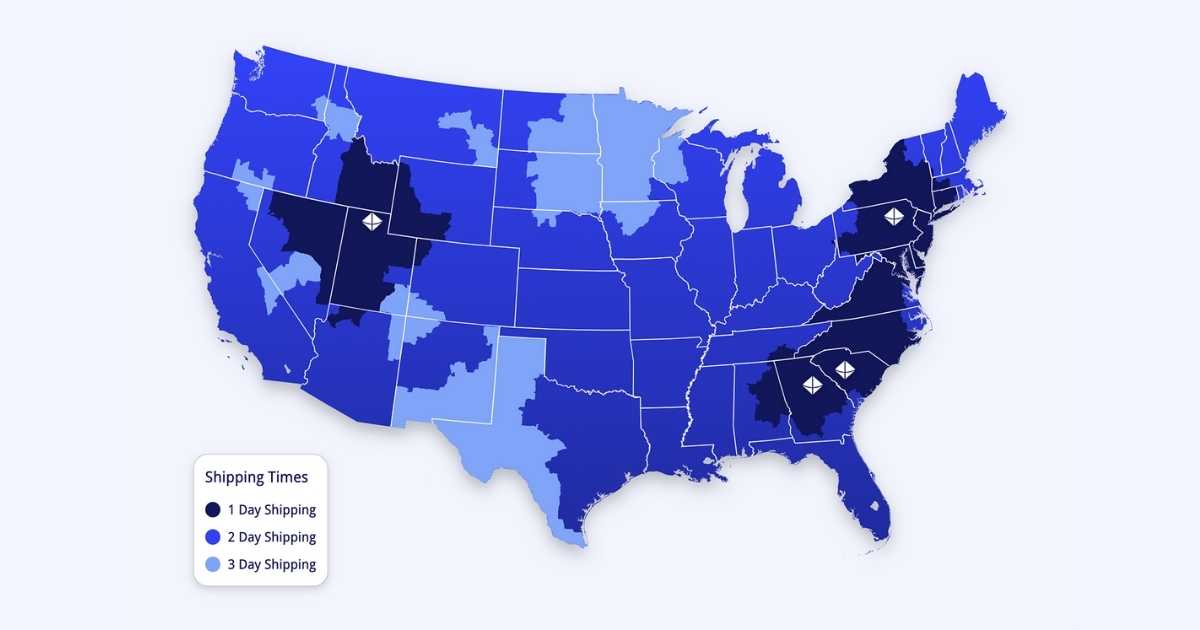
- Distributed Nationwide Demand: If your customers are spread across the country, a 3PL with a distributed warehouse network is essential for meeting SFP’s 1-2 day shipping requirements cost-effectively. Shipping from facilities in the East, West, and Central US reduces transit times and shipping costs.
- Multi-Channel Sales: Are you selling on your own website, other marketplaces, and Amazon? Managing separate inventory pools for FBA and your other channels is inefficient and capital-intensive. An SFP/3PL partnership allows you to fulfill all orders from a single, unified inventory, improving forecasting and preventing stockouts.
- Sensitivity to Returns: FBA’s automated, no-questions-asked returns process can be costly and frustrating. With SFP, you control the returns experience. Your 3PL can inspect returned items based on your criteria, salvage what’s possible, and provide better data to reduce your return rate over time.
- Need for Custom Kitting & Bundling: Do you offer product bundles, subscription boxes, or kits? These value-added services are difficult to execute with FBA. A flexible 3PL partner can perform custom kitting and assembly on-demand, allowing you to create unique offers that stand out.
Red Flags: When SFP Might Not Be the Right Choice
SFP is a powerful tool, but it's not for everyone. Be cautious if your business aligns with these red flags:
- You Have Very Low Order Volume: If you ship fewer than a few hundred orders a month, the economics of a 3PL partnership and the operational rigor of SFP may not make sense. FBA or FBM (Fulfillment by Merchant) are often better starting points.
- Your Logistics Are Fragile: SFP demands a 99% on-time shipment rate. If your supply chain is inconsistent or your inventory planning is unreliable, you risk failing the SFP trial and getting suspended from the program.
- You Lack a Qualified 3PL Partner: Attempting to manage SFP in-house is a massive undertaking. Without a 3PL that has proven experience with SFP compliance, you are setting yourself up for failure.
SFP in Action: Mini Case Studies
Vignette 1: The Outdoor Furniture Brand
- Problem: An outdoor furniture brand was seeing its margins on Amazon disappear due to FBA's dimensional weight fees and long-term storage costs for seasonal items.
- Solution: They switched to SFP with a2b fulfillment. We placed their inventory in our warehouses in Georgia, Pennsylvania and Utah.
- Result: They cut fulfillment costs by 28% per unit, eliminated over $100,000 in annual storage penalties, and met nationwide 2-day delivery requirements for the Prime badge.
Vignette 2: The Multi-Channel Apparel Company
- Problem: A fashion brand selling on Amazon and Shopify struggled with managing two separate inventory pools, leading to stockouts on their website whenever FBA inventory was prioritized.
- Solution: They adopted a hybrid SFP model. A single inventory pool at a2b fulfillment powered both their SFP orders and their DTC orders.
- Result: They improved overall inventory efficiency by 40% and used custom packaging for all orders, strengthening their brand identity across all channels.
Vignette 3: The High-Value Electronics Seller
- Problem: A seller of high-end audio equipment was worried about damage and "lost" inventory within the FBA network.
- Solution: Moving to SFP gave them full control over handling and packaging.
- Result: They reduced their damage and loss rate by over 75% and improved customer satisfaction by managing returns directly, leading to better reviews and higher sales velocity.
Are You Ready for SFP? A Checklist
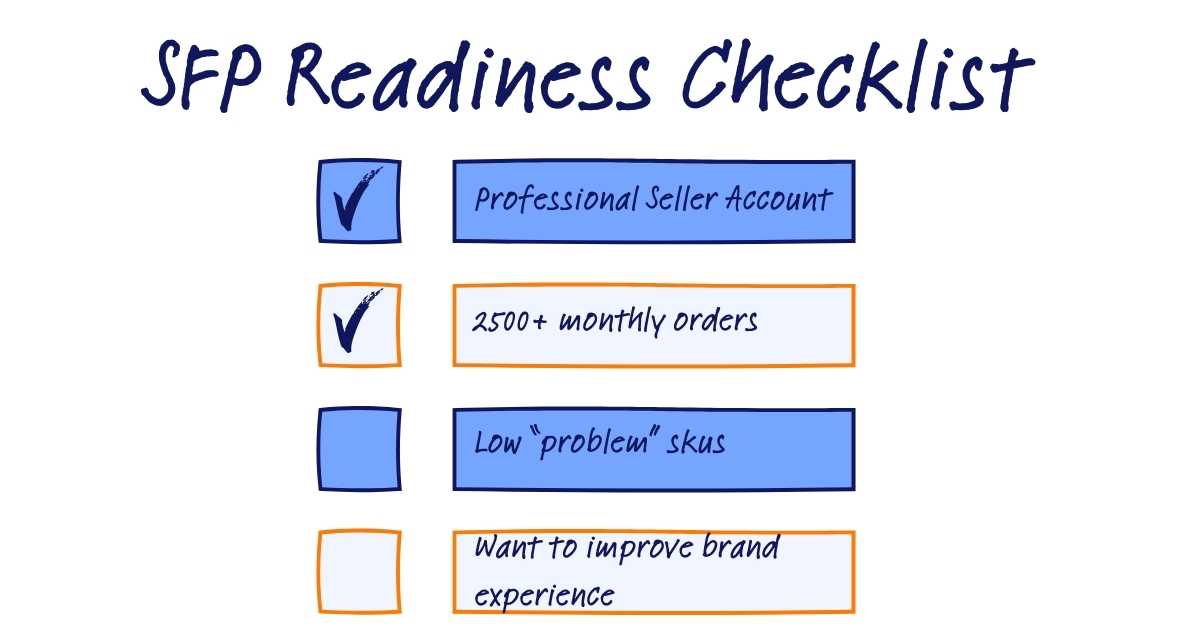
If you've identified with the profiles above, the next step is to prepare for a formal assessment.
SFP Readiness Checklist:
- You have a Professional Seller Account in good standing.
- Your monthly order volume is consistently above 2,500.
- You have a clear understanding of your "problem SKUs" (e.g., bulky, slow-moving).
- You are committed to improving your brand's customer experience.
What to Bring to Your Assessment:
To get the most accurate savings projection, have this data ready:
- A list of your top 20% of ASINs.
- Recent sales data, including units sold per month.
- Product dimensions and weights for those top ASINs.
- Your current FBA fee reports.
Discover Your SFP Opportunity
The only way to know for sure how much you can save is to run the numbers. Our team of experts is ready to provide a free, no-obligation analysis of your current fulfillment costs versus a tailored SFP strategy. Take the first step toward a more profitable future on Amazon.
Contact Us for a Free Assessment
Disclaimer: Outcomes are dependent on your specific product catalog, item dimensions and weights, shipping destinations, and the ability to consistently meet Amazon's Seller Fulfilled Prime performance standards. The examples provided are for illustrative purposes only.