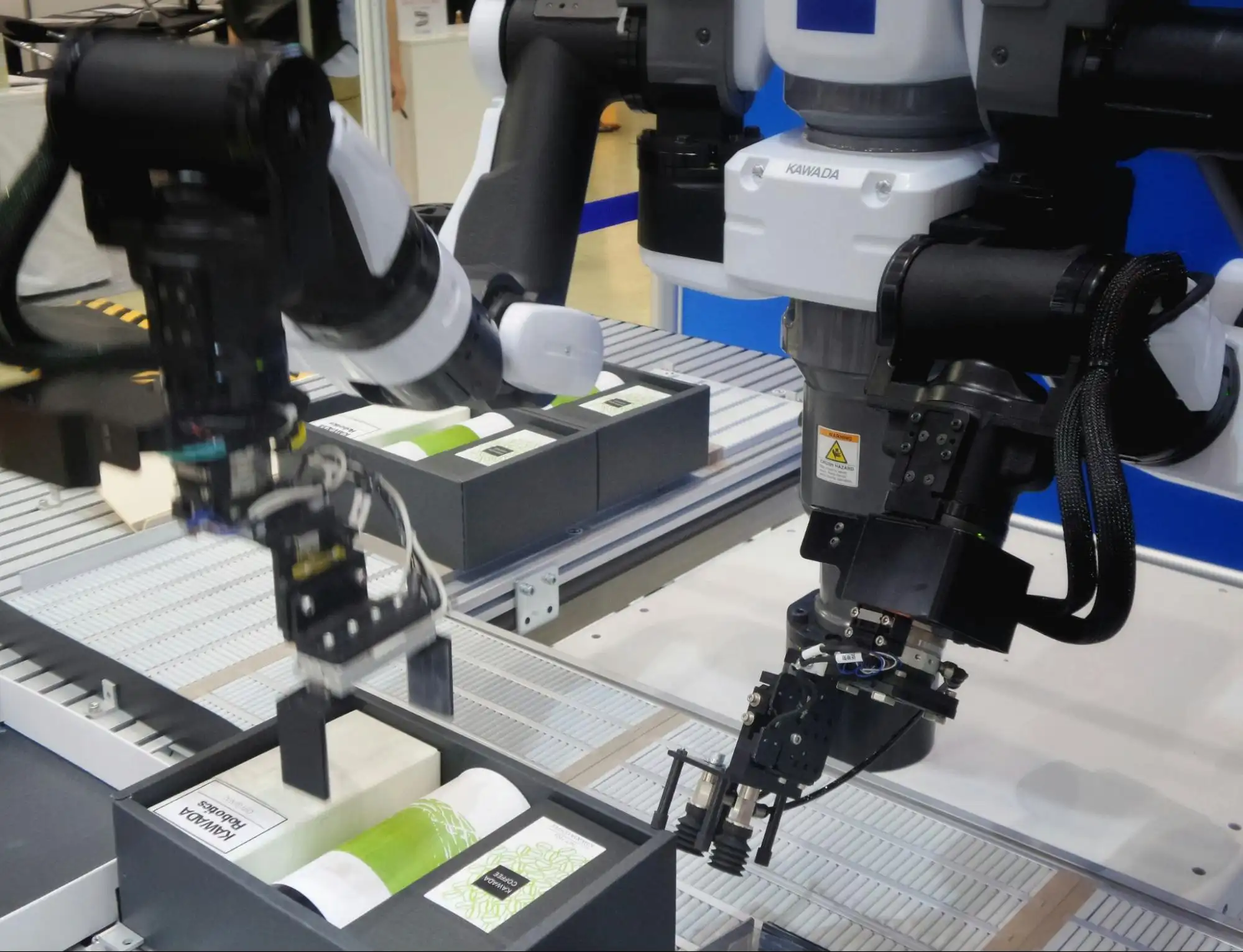
TL;DR: Artificial intelligence is rapidly transforming how goods are stored, picked, packed, and shipped. From smarter inventory forecasting to autonomous warehouse robots, AI tools are helping the logistics industry run faster, more accurately, and at greater scale. This blog breaks down exactly how that's happening and what it means for brands evaluating their fulfillment strategy.
In this article:
- How Is AI Changing Warehousing and Inventory Management?
- Can AI Make Order Fulfillment Faster and More Accurate?
- The Benefits of Partnering With an AI-Enabled 3PL
How Is AI Changing Warehousing and Inventory Management?

The numbers tell the story. In 2024, the global AI in warehousing market reached $11.4 billion, and analysts project it will grow to $42.9 billion by 2030, representing a 24.8% compound annual growth rate. That kind of investment doesn’t happen without results.
At its core, AI in warehousing reduces common problems in manual work. These include misplaced inventory, wrong stock counts, slow pick paths, and reactive decisions. Understanding how modern fulfillment centers operate is the first step to appreciating why AI has become so central to the industry.
AI-Powered Warehouse Management Systems (WMS)
Modern AI-driven warehouse management systems (WMS) track inventory in real time, flagging discrepancies before they become costly errors. They also optimize slotting, which is the process of deciding where to store products based on order frequency. They also improve pick-path efficiency and storage limits.
For example, when customers often order one item with another, AI systems place the items near each other. This can greatly reduce pick times. This directly addresses one of the most common causes of inventory shrinkage: poor product placement and tracking.
Demand Forecasting That Actually Works
One of the most impactful applications of AI in logistics is demand forecasting. Traditional methods relied on simple historical averages, which routinely broke down during promotional events, seasonal shifts, or supply disruptions. As explored in our guide to key inventory control metrics, the ability to predict demand accurately is foundational to keeping stock levels optimized and customers satisfied.
AI-driven models take a fundamentally different approach: they analyze dozens to hundreds of variables simultaneously, such as past sales data, market trends, weather patterns, social media signals, and economic indicators, to generate far more accurate predictions. According to Oracle, AI-based demand forecasts recalibrate continuously as new data arrives, improving accuracy over time rather than degrading.
Research from the International Journal of Science and Advanced Technology found that organizations using AI for demand planning improved forecast accuracy by 31–42% compared to traditional methods, while also reducing emergency replenishment orders by 41%. For brands, that translates directly into fewer stockouts, less excess inventory tying up working capital, and fewer expedited shipping fees, especially critical during peak season.
Autonomous Mobile Robots (AMRs) in Modern Fulfillment Centers
%20in%20Modern%20Fulfillment%20Centers.jpg)
Walk into a leading fulfillment center today, and you’re likely to see autonomous mobile robots moving goods across the warehouse floor. AMRs navigate dynamically using AI-powered sensors and mapping algorithms, avoiding obstacles and optimizing their routes in real time.
The accuracy improvements are significant. According to market research, 3PLs like a2b using AMR fleets alongside smart inventory systems report pick accuracy rates exceeding 99.9%, compared to the 97–98% typical of manual operations. That gap may seem small, but at high order volumes, it means thousands fewer mis-ships per month, each of which carries the cost of a reship, a customer service interaction, and potential brand damage.
AMRs also address a problem that is accelerating across the industry: labor availability. In metropolitan areas across the U.S., direct warehouse labor rates now exceed $20 per hour, and average annual turnover in warehouse environments can surpass 37%. AMRs handle repetitive, physically demanding tasks around the clock, freeing human workers to focus on judgment-intensive work. This mirrors the broader evolution of technology that has reshaped fulfillment operations over the past two decades.
Real-Time Visibility Across the Supply Chain
AI enables something that has long been the holy grail of logistics: genuine end-to-end visibility. When an order is placed, AI systems can track its status from warehouse pick through carrier handoff to final delivery, providing live updates that reduce “where is my order” (WISMO) inquiries, which are a major driver of ecommerce customer service volume. This kind of transparency is one of the core capabilities that separates a full-service 3PL partner from a basic warehousing provider.
Beyond tracking, AI-powered supply chain monitoring can proactively flag anomalies. A shipment running behind schedule, a carrier showing degraded on-time performance, and a supplier with increasing lead times are all signals giving operations teams time to reroute before a small delay becomes a customer-facing problem.
Can AI Make Order Fulfillment Faster and More Accurate?

The short answer is yes—substantially. AI shortens fulfillment cycle times by automating repetitive decision points that create friction, while simultaneously reducing the human error that accumulates at manual touchpoints. Understanding the full scope of fulfillment services makes clear just how many touchpoints exist and how many opportunities AI has to improve them.
The AI-Assisted Fulfillment Workflow
Here’s what an AI-enabled fulfillment process looks like end-to-end:
- Order receipt and intelligent routing: Incoming orders are automatically assigned to the optimal warehouse location based on inventory position, carrier zones, and delivery commitments.
- Optimized pick paths: AI calculates the most efficient route through the warehouse for each pick, dramatically reducing travel time, which can consume 50–70% of a manual picker’s working hours in traditional operations.
- Automated packing recommendations: Systems recommend box sizes and packing configurations to minimize void fill, reduce dimensional weight charges, and protect products in transit.
- AI-powered carrier selection: Algorithms evaluate cost, delivery speed, reliability history, and destination-zone data to select the optimal shipping method for each order. Strategic fulfillment location plays a key role here; placing inventory closer to end customers enables faster, cheaper carrier options.
- Label generation and quality control checkpoints: Automated scanning and verification catch errors before packages leave the building.
Returns Processing: A Frequently Overlooked AI Opportunity
Returns are one of the most expensive and time-consuming parts of ecommerce fulfillment. AI is changing this by automating the sorting, grading, and restocking decision process. When a return arrives, AI-enabled systems can assess the item’s condition, determine whether it’s restockable, and route it accordingly, all without requiring a human to inspect every package.
For high-volume brands, this can meaningfully reduce the cost and processing time associated with reverse logistics. An effective returns management program can even turn this traditionally costly process into a revenue-positive operation when handled well.
The Benefits of Partnering With an AI-Enabled 3PL

For most growing ecommerce brands, building an AI-powered logistics infrastructure in-house isn’t realistic. The capital investment in robotics, WMS software, and integration development is substantial, and the operational expertise required to run it effectively takes years to build. This is where partnering with a tech-forward third-party logistics provider (3PL) changes the equation.
Scalability Without Capital Risk
AI fulfillment systems scale dynamically with order volume. During Q4 peak season or a major promotional event, the same infrastructure that handles normal daily volume can absorb a 3–5x surge without a corresponding drop in accuracy or speed. Brands using a 3PL access this scalability without owning the underlying hardware or software and without staffing up and down with seasonal demand. This is especially critical for B2B fulfillment operations, where delivery precision is contractually required regardless of volume fluctuations.
Cost Efficiency Through Smarter Operations
AI reduces waste at multiple points in the fulfillment cost structure: excess inventory carrying costs decline with accurate forecasting, expedited shipping fees decrease with proactive shipment planning, and failed delivery attempts drop with AI-assisted address validation and carrier selection. According to research on AI-driven inventory optimization, businesses implementing AI-based inventory management have reported average inventory reductions of 20–30%, which directly improves cash flow without sacrificing service levels.
Data-Driven Decision Making for Ecommerce Brands
One underappreciated benefit of working with an AI-enabled 3PL is access to analytics. The data generated by AI-powered fulfillment operations (inventory turns, cost per order, shipping performance by carrier and zone, return rates by SKU) provides brands with the visibility needed to make smarter decisions about their product mix, pricing, and marketing calendars. Tracking the right inventory control metrics is foundational to this kind of operational intelligence, which was previously accessible only to large enterprises with dedicated data teams.
Competitive Advantage for Smaller Brands
The logistics capabilities available through an AI-enabled 3PL partnership allow a DTC brand with modest order volume to deliver the same two-day fulfillment experience as much larger competitors. The playing field has leveled considerably: AI infrastructure that would have cost tens of millions of dollars to build even five years ago is now accessible through a 3PL relationship. For brands exploring dropshipping models in particular, the combination of AI-powered inventory visibility and flexible fulfillment can dramatically reduce the risk of stock imbalances.
Resilience Against Supply Chain Disruptions
AI-driven exception management means that when things go wrong, like a weather event delaying a carrier, a demand spike from a viral product moment, or a supplier running behind, the system flags the issue proactively rather than reactively. Operations teams can reroute, restock, or communicate with customers before the situation escalates into chargebacks or bad reviews. This kind of resilience is particularly valuable in B2B and retail fulfillment, where missing a delivery window can trigger costly chargeback penalties from retail partners.
What to Look for in a Tech-Forward 3PL Partner

Not all 3PLs claiming to be “tech-enabled” have equivalent capabilities. When evaluating a partner, look for:
- Native integration with your ecommerce stack: Shopify, WooCommerce, Amazon, BigCommerce, and other major platforms should connect seamlessly, without manual data exports. Technology-driven fulfillment providers invest heavily in these integrations so you don’t have to.
- Client-facing reporting dashboards: You should have real-time visibility into your own inventory and order performance, without having to request reports.
- SLAs backed by data: A 3PL confident in its operations will commit to specific accuracy and on-time rates—and show you the data to prove it.
- Ongoing technology investment: The AI logistics landscape is evolving fast. Look for a partner that demonstrates a track record of adopting new capabilities.
The Bottom Line
AI is no longer a future-facing concept in logistics. The operational baseline separates efficient fulfillment from costly, error-prone alternatives.
For brands, the decision isn’t fundamentally whether to adopt AI-powered fulfillment; it’s whether to build that capability yourself or access it through the right 3PL partner. The brands that get this right will have a structural advantage in fulfillment cost, speed, and customer experience for years to come. If you’re new to evaluating your options, our fulfillment resource hub is a good place to start.
Frequently Asked Questions
What is AI in logistics?
AI in logistics operations refers to the use of artificial intelligence technologies, including machine learning, automation, computer vision, and predictive analytics, to optimize the movement, storage, and delivery of goods. Applications range from demand forecasting and inventory management to autonomous picking robots and AI-powered carrier selection.
How does AI improve order fulfillment accuracy?
AI reduces human error by automating repetitive decision points throughout the fulfillment process: calculating optimal pick paths, validating items at quality control checkpoints, recommending packing configurations, and generating shipping labels. AI-guided picking systems have demonstrated pick accuracy rates above 99.9%, compared to 97–98% for traditional manual operations (source). Learn more about how modern fulfillment centers achieve this.
Can AI in logistics help my business during peak seasons?
Yes. AI fulfillment systems are built to scale dynamically with order volume. During peak seasons like Q4 or major promotional events, AI-powered warehouse management systems and autonomous robots can handle significant volume surges without a corresponding drop in accuracy or processing speed, and that is something difficult to achieve by scaling manual labor alone.
How does AI improve demand forecasting?
Traditional forecasting relied primarily on historical sales averages. AI models process a much wider range of variables—seasonality, promotions, market trends, weather, and economic signals—to generate significantly more accurate predictions.
AI-based demand forecasting improves accuracy by 31–42% over traditional methods. It helps place inventory more effectively and reduces costly stockouts and overstock. For a deeper look at the metrics that matter, see our guide to inventory control key metrics.
What’s the difference between a standard 3PL and an AI-enabled 3PL?
A standard 3PL provides warehousing and shipping services, typically relying on manual processes and basic WMS software. An AI-enabled 3PL integrates machine learning, predictive analytics, automation, and real-time data insights into its core services. This leads to faster fulfillment, higher accuracy, better inventory management, and more useful data for brands. For a full breakdown of what to expect from a modern provider, see our deep-dive on fulfillment solutions.
About the Author
Sarah Smith is Vice President of Marketing at a2b Fulfillment, where she leads brand strategy, content, and sales enablement for one of the industry's most operationally focused third-party logistics providers. With more than 10 years of experience spanning marketing and logistics, Sarah brings a ground-level understanding of what eCommerce brands need from a fulfillment partner. Her writing covers 3PL technology, DTC and B2B fulfillment operations, supply chain strategy, and the evolving demands of modern eCommerce.