Key Takeaways
- Brands that outsource fulfillment grow revenue nearly six times faster than those with owned warehouses, according to the 2026 eComFuel Trends Report.
- Roughly 57% of ecommerce companies now outsource some or all of their fulfillment processes, a share that continues to rise.
- The U.S. third-party logistics market is projected to grow at an 8.4% compound annual growth rate through 2030, adding over $146 billion in value.
- DTC-primary brands grow revenue 65% faster and carry higher gross margins than Amazon-primary peers, signaling a shift in channel strategy.
- Tariff pressure, rising overhead costs, and omnichannel complexity are pushing supply chain teams toward flexible, scalable fulfillment partnerships.
- Technology, particularly real-time inventory visibility and AI-assisted logistics, is now a primary factor in 3PL selection.
The Fulfillment Decision Is Now a Growth Decision
For years, fulfillment was treated as a back-office function. You picked a warehouse model, you staffed it, and you managed the costs. The goal was to keep things running and keep expenses predictable.
That framing no longer fits the market.
Data from the 2026 eComFuel Trends Report, which draws on survey responses from 300 store owners representing $3.5 billion in combined revenue, makes a striking case: how and where brands fulfill orders is now one of the strongest predictors of growth. Operations executives and supply chain leaders who understand this shift will be positioned to move faster, spend smarter, and scale with less friction.
Here is what the data says, and what it means for your fulfillment strategy.
Warehouse Ownership Is Slowing Brands Down

The eComFuel data draws a sharp contrast between brands that own their warehouse space and those that lease or outsource. Brands with owned warehouses grew revenue at just 3.9% over the past year. Brands that lease warehouse space grew at 33.5%. Those that outsource fulfillment entirely grew at 22.2%.
That is not a marginal difference. It is a structural one. Owned warehouses carry twice the inventory burden, require larger in-house teams, and reduce operational flexibility. When demand shifts, brands with owned facilities have far fewer options to respond quickly.
The same report notes that remote-first teams, those with 75% or more of staff working remotely, grew net income at 51.8% versus 26.9% for in-office-heavy operations. Remote teams also run leaner, averaging 10.5 employees at nearly double the median revenue per employee compared to their in-office counterparts.
None of this means that every business should exit its owned warehouse tomorrow. For certain niche operators with deep SKU complexity and a strong inventory moat, ownership has strategic value. But for the majority of growing ecommerce brands, the data suggests that flexibility outperforms control.
Outsourcing Is Now the Majority Position
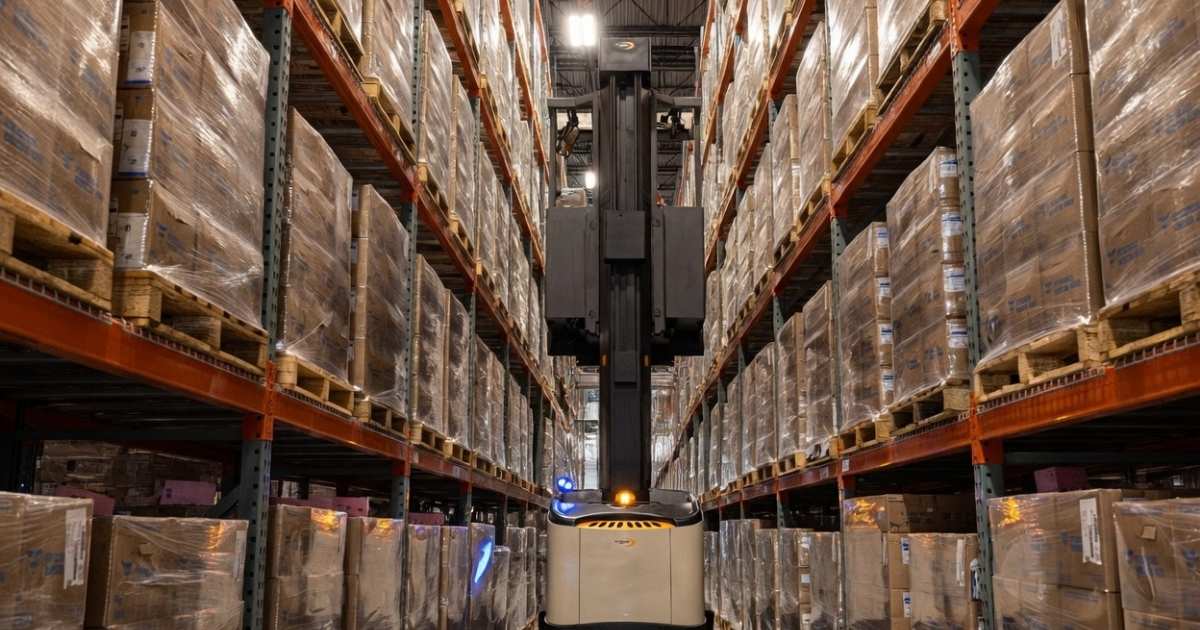
The shift toward 3PL partnerships is no longer a trend on the horizon. It has already happened for most of the market.
Approximately 57% of ecommerce companies now outsource some or all of their fulfillment operations, according to industry research compiled by Productiv. That number has grown steadily as ecommerce brands recognize that warehousing and logistics are not their core competency.
A Forrester study cited by Amazon Multi-Channel Fulfillment found that retailers outsourcing to a 3PL achieved a 29% improvement in on-time delivery rate and a 28% reduction in cost per order, on average. Nearly 80% of ecommerce leaders also said outsourcing freed up meaningful time to focus on other parts of their business.
The reason is straightforward: a well-run 3PL brings infrastructure, technology, and expertise that most brands cannot cost-effectively replicate in-house. That includes real-time inventory systems, carrier relationships, warehouse automation, and the ability to scale up or down based on volume.
For supply chain executives, this creates a clear question: is the fulfillment operation you manage today built to support the growth strategy you have for the next three years?
The 3PL Market Is Expanding, and Expectations Are Rising

The U.S. third-party logistics market is valued at an increase of $146.8 billion between 2025 and 2030, growing at an 8.4% compound annual growth rate, according to Technavio research. Ecommerce fulfillment volume is the primary driver.
That growth is not evenly distributed. The 3PLs winning new business are those that can demonstrate technology integration, operational flexibility, and measurable service performance. The 2026 Third-Party Logistics Study found that 74% of shippers say they would switch 3PL providers based on AI capabilities alone. Speed and visibility are now the primary competitive advantages shippers look for when evaluating partners.
Omnichannel complexity is adding to the pressure. Brands no longer operate in one channel. They manage inventory across their own DTC site, marketplaces, retail partners, and wholesale accounts simultaneously. According to Productiv, 3PLs that can manage inventory across all of these channels from a single, unified platform are capturing the most growth. The old model of channel-specific, siloed warehouses is giving way to integrated fulfillment infrastructure that supports all order types in real time.
Reverse logistics is also becoming a differentiator. Ecommerce return rates significantly exceed in-store return rates, and operations executives are increasingly evaluating 3PLs on their ability to handle returns efficiently, including restocking, eco-friendly disposal, and fast refund processing.
DTC Growth Is Outpacing Marketplace Dependence

The eComFuel data contains a notable finding for supply chain and operations teams: the shift away from Amazon as a primary revenue channel is accelerating, and it is having a direct impact on fulfillment strategy.
DTC-primary operators in the 2026 survey grew revenue 65% faster than Amazon-primary peers, and carried gross margins of 52.7% compared to 41.9% for Amazon-first brands. Operator sentiment reinforces the data: 91% of those selling primarily through DTC reported strong satisfaction with the channel. Only 17% said the same about Amazon.
Amazon's share of community revenue has fallen to 20.1%, the same level as when eComFuel first began tracking it in 2017. More operators sell on Amazon today than at any point in survey history, yet Amazon accounts for a smaller share of total revenue. The platform has shifted from being a growth engine to a supplemental channel.
For fulfillment strategy, this matters. DTC growth requires reliable, branded, fast fulfillment that reflects the customer experience a company is building. It demands tight inventory control, flexibility in packaging and inserts, and the ability to hit carrier service commitments consistently. These are not capabilities that scale well in-house without significant investment.
Tariffs and Cost Pressure Are Changing the Fulfillment Calculus
Tariffs remain a significant operational challenge for ecommerce brands. The eComFuel report found that brands impacted by tariffs absorbed 58% of the cost increase without passing it to consumers. Forty percent of U.S. brands did not raise prices at all.
That margin compression lands directly on operations. When product costs rise and selling prices hold steady, every dollar of operational overhead matters more. Fulfillment costs, carrier rates, warehousing fees, and labor expenses all come under greater scrutiny.
A separate Gartner study noted that 52% of industrial companies with operations in China are relocating some sourcing or production to other cost-effective locations to reduce supply chain risk. This nearshoring trend is driving demand for regional fulfillment networks that can support shorter lead times and lower freight exposure.
Prologis, in its 2026 supply chain outlook, projects that global ecommerce penetration will reach 19.7% by year-end, and that demand for power-ready logistics facilities capable of supporting automation will be a top-three factor in location selection. Brands that lock in flexible 3PL arrangements now are better positioned to adapt as sourcing and distribution networks continue to shift.
Technology Is the New Baseline
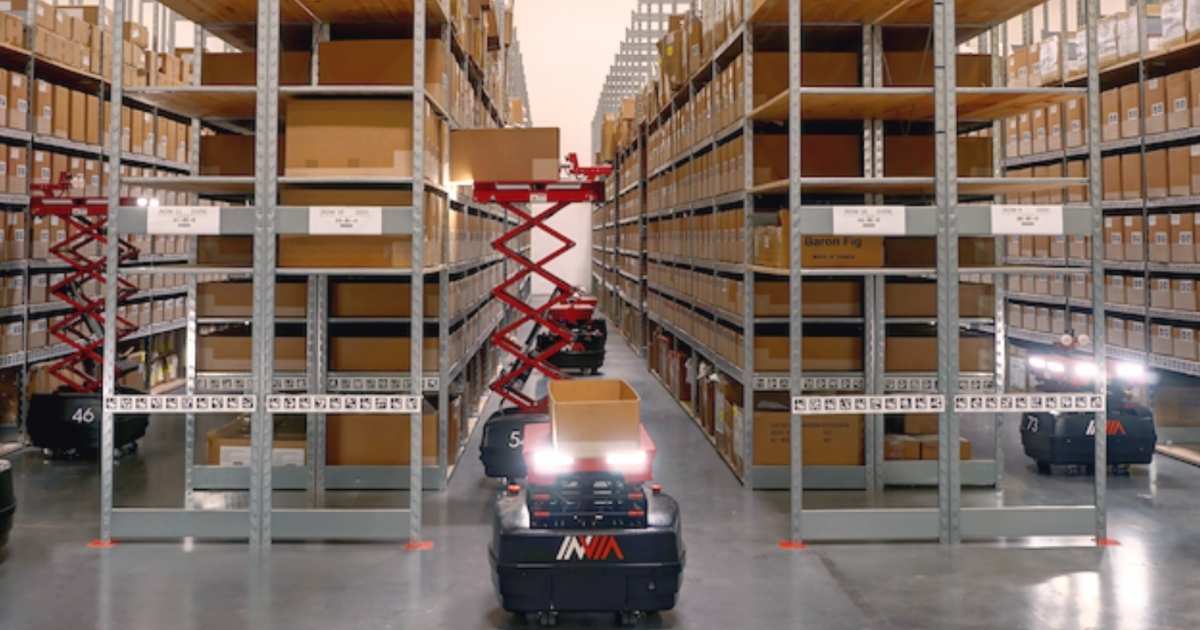
Across nearly every industry study published in the past 12 months, technology integration appears as either the top reason brands choose a 3PL or the top reason they leave one.
The data from Productiv found that 82% of ecommerce leaders cite access to state-of-the-art fulfillment technology as a key reason for outsourcing. Automation is part of that picture. The warehouse robotics market reached $9.33 billion in 2025 and is projected to grow at a 17.7% CAGR through 2030, according to Mordor Intelligence. But technology in the context of 3PL selection is broader than robots.
It includes warehouse management system capabilities, real-time order tracking, integration with ecommerce platforms and ERPs, predictive demand tools, and data visibility across the supply chain. For operations executives, these are no longer nice-to-haves. They are the baseline requirements for a partner that can support a modern fulfillment program.
The eComFuel report offers a note of caution here. Despite 72% of ecommerce owners adopting AI tools in their businesses, the financial results have not yet separated AI users from non-users. The interpretation for operations teams is practical: technology adoption matters, but implementation quality and workflow integration matter more than the tools themselves.
What This Means for Operations and Supply Chain Leaders

The data from this year's ecommerce landscape points in one consistent direction: operational flexibility, supported by capable fulfillment partnerships, is the lever most likely to drive both growth and profitability.
For operations executives evaluating their current model, the relevant questions are not just about cost per unit shipped. They include:
- Is the current fulfillment model scalable without a proportional increase in fixed cost?
- Does the fulfillment operation support DTC, wholesale, and marketplace channels from a unified inventory source?
- Can the current setup absorb tariff-driven shifts in sourcing or inventory positioning without a major rebuild?
- Does the fulfillment partner provide the technology integration and reporting visibility needed to run a data-driven supply chain?
- How does the current reverse logistics process affect both margin and customer experience?
These are strategic questions, not just operational ones. The brands gaining ground in 2026 are the ones treating fulfillment as a growth function, not a cost center.
How a2b Fulfillment Can Help
a2b Fulfillment works with ecommerce brands and their operations teams to design and execute fulfillment programs that support growth without adding unnecessary fixed cost or complexity. From DTC and omnichannel order management to returns processing and technology integration, a2b brings the infrastructure and operational depth to serve as a true supply chain partner. If you are evaluating your current fulfillment model or planning for the year ahead, we welcome the conversation.
Frequently Asked Questions
Q: What does the data say about the impact of outsourcing fulfillment on revenue growth?
According to the 2026 eComFuel Trends Report, brands that outsource fulfillment entirely grew revenue at 22.2%, and those that lease warehouse space grew at 33.5%. By contrast, brands with owned warehouses grew at just 3.9%. While correlation does not imply direct causation, the gap is consistent enough across revenue tiers to be meaningful for strategic planning.
Q: What is driving the shift away from Amazon as a primary sales channel?
A combination of fee increases, margin compression, and a desire to build direct customer relationships is pushing brands toward DTC. The eComFuel data shows that DTC-primary operators grow revenue 65% faster and carry higher gross margins than Amazon-primary operators. Many brands now treat Amazon as one channel among several rather than their primary growth engine.
Q: How are tariffs affecting fulfillment strategy?
Brands absorbing tariff costs are seeing direct margin compression, which puts more pressure on operational overhead, including fulfillment. Many companies are nearshoring production or diversifying their sourcing, which in turn requires flexible fulfillment networks that can adapt to new inventory flows. Regional fulfillment partnerships that support shorter lead times are increasingly valuable in this environment.
Q: What technology capabilities should supply chain executives look for in a 3PL partner?
Real-time inventory visibility, seamless integration with ecommerce platforms and ERPs, omnichannel order management, and strong reporting and analytics are now baseline expectations. According to multiple industry studies, 74% of shippers say they would switch 3PL providers based on AI capabilities, which reflects how central technology has become to the 3PL selection process.
Q: How should operations executives evaluate whether their current fulfillment model is holding back growth?
Start by asking whether your fulfillment costs scale proportionally with volume, or whether fixed overhead creates a ceiling. Then assess whether your current setup supports all active sales channels from a single inventory pool. If the answer to either question reveals rigidity, it is worth evaluating whether a 3PL partnership could provide the flexibility needed to support your growth targets.
Q: Is ecommerce outsourcing only viable for large brands?
No. The barrier to entry for 3PL partnerships has dropped significantly. Industry reporting notes that even smaller merchants now find outsourcing viable. For growing brands, working with a 3PL can provide access to warehouse automation, carrier discounts, and technology systems that would be cost-prohibitive to build in-house.
About the Author
Sarah Smith is Vice President of Marketing at a2b Fulfillment, where she leads brand strategy, content, and sales enablement for one of the industry's most operationally focused third-party logistics providers. With more than 10 years of experience spanning marketing and logistics, Sarah brings a ground-level understanding of what eCommerce brands need from a fulfillment partner. Her writing covers 3PL technology, DTC fulfillment operations, supply chain strategy, and the evolving demands of modern eCommerce.