

Understanding how you track and value your inventory can significantly impact your financials, operations, and compliance. FIFO (First In, First Out) and LIFO (Last In, First Out) are common inventory and accounting methods. Choosing the right one depends on your product type, market, and business goals. This guide breaks down how each method works, what sets them apart, and how to decide which approach makes sense for your business.
Table of Contents
- What Is FIFO Inventory Management?
- What Is LIFO Inventory Management?
- FIFO vs LIFO: What's the Difference?
- What Are the Pros and Cons of FIFO?
- What Are the Pros and Cons of LIFO?
- Which Method Is Right for Your Business?
- How Does a 3PL Like a2b Support Your Inventory Method?
- Conclusion
- FAQs
What Is FIFO Inventory Management?

FIFO stands for First In, First Out. In practice, it means you sell or pick for fulfillment the oldest inventory you received first. The most intuitive inventory method for businesses that deal with products that age, expire, or have date-sensitive shelf lives.
Think of a grocery store dairy aisle: employees stock the milk closest to its expiration date at the front so customers buy it first. That is FIFO in action.
How FIFO Works Operationally
In a warehouse environment, new stock is placed behind or beneath existing inventory. Order picking always starts with the oldest lot. A warehouse management system (WMS) that tracks lot numbers and expiration dates makes this seamless and reliable at scale.
How FIFO Works as an Accounting Method
On the books, FIFO means your cost of goods sold (COGS) is calculated using the cost of your oldest inventory units first. When purchase prices rise over time, companies report lower COGS and higher profits because they expense older, cheaper units before newer, pricier ones.
Industries That Rely on FIFO
FIFO is the standard for any product category where freshness, safety, or regulatory compliance is at stake, including:
- Food and beverage
- Supplements and vitamins
- Health and beauty
- Pharmaceuticals
- Cosmetics
a2b Fulfillment uses FIFO as its default operational method for applicable product categories. Its WMS tracks lot numbers and expiration dates to automatically enforce accurate rotation.
What Is LIFO Inventory Management?
LIFO stands for Last In, First Out. With this method, you pick and sell the most recently received inventory first. Imagine a cafeteria tray stack: whoever grabs a tray takes the one placed on top most recently, not the one at the bottom.
How LIFO Works Operationally
New stock is placed at the front or top of existing inventory. Order picking begins with the newest arrivals, which means older inventory can sit in the back indefinitely. Non-perishable or commodity goods don’t raise this concern because product quality doesn’t depend on age, but anything with a shelf life faces a real risk.
How LIFO Works as an Accounting Method
Under LIFO, COGS is calculated using the cost of the most recently acquired inventory. In a rising-price environment, this results in higher COGS and lower taxable income, which can provide a short-term tax advantage. However, this benefit comes with a major limitation: International Financial Reporting Standards (IFRS) do not permit LIFO. Only U.S. GAAP allows it, making it inaccessible to international businesses or those seeking global investment.
Industries Where LIFO Sometimes Appears
LIFO occasionally appears in industries dealing with non-perishable goods, raw materials, or commodities, where product rotation order has no impact on quality and cost fluctuations are the primary financial concern.
FIFO vs LIFO: What's the Difference?
How Inventory Flows
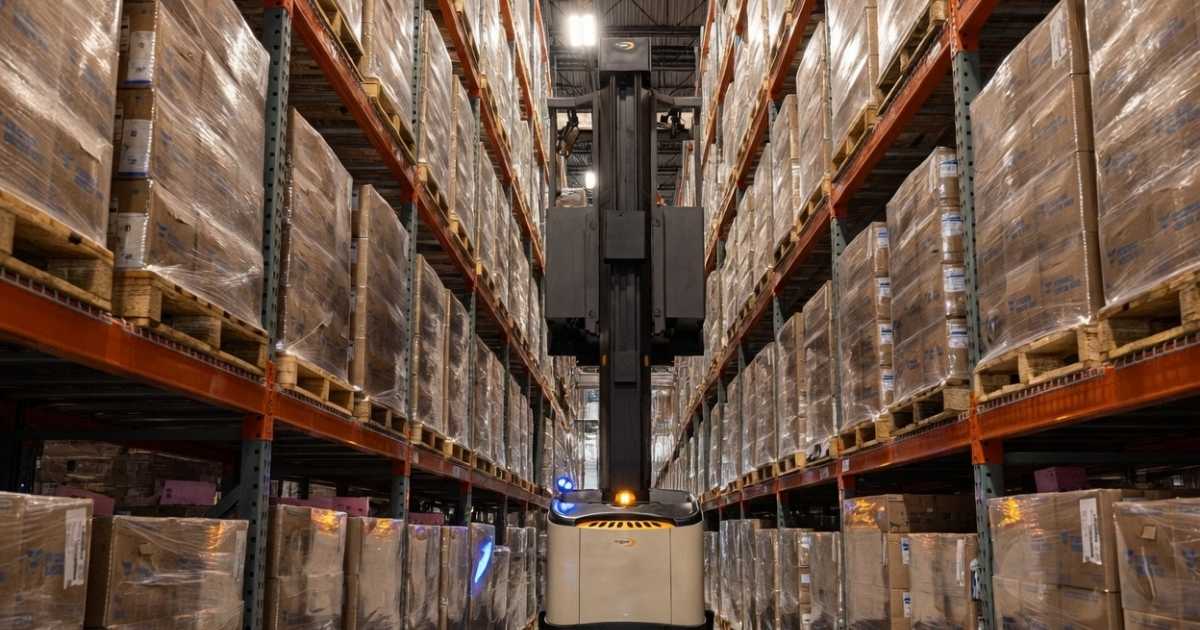
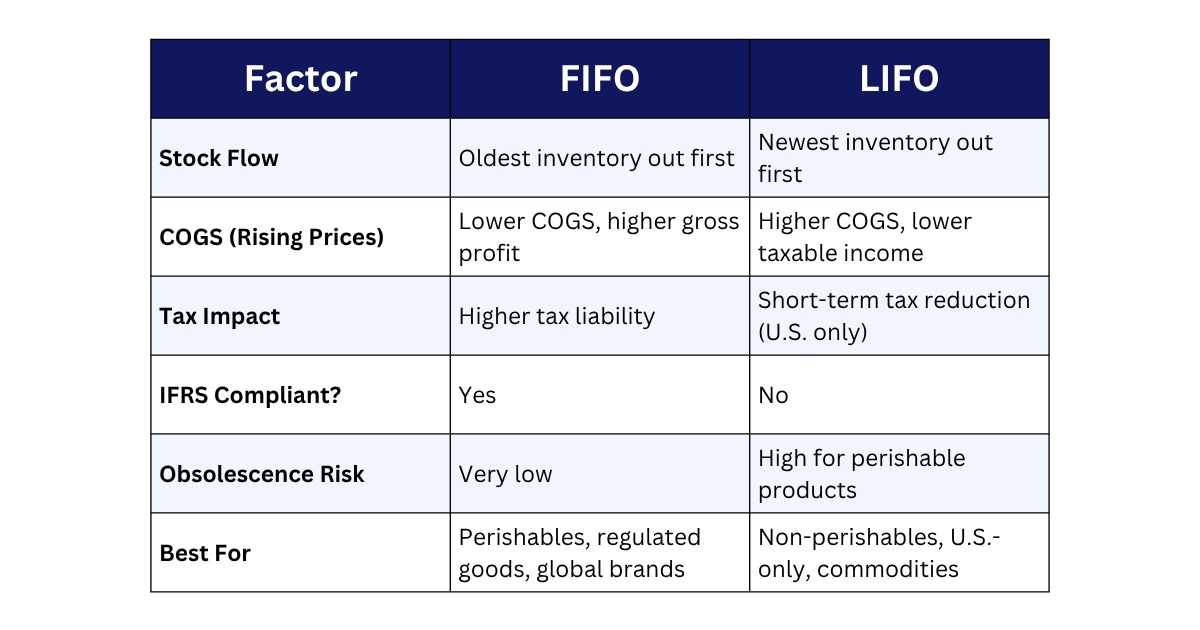
With FIFO, physical movement of stock matches its chronological receipt order: the oldest goes out first. With LIFO, that order is inverted: the newest stock ships first, and older inventory can accumulate indefinitely.
Impact on Cost of Goods Sold (COGS)
In a stable pricing environment, the two methods produce similar COGS results. The divergence happens when prices change:
- Rising prices: FIFO produces lower COGS and higher gross profit. LIFO produces higher COGS and lower taxable income.
- Falling prices: The effects reverse. FIFO produces higher COGS; LIFO produces lower.
Impact on Reported Profits and Taxes
FIFO tends to produce higher reported profits, which can attract investors but also increases tax liability. LIFO can reduce the short-term tax burden, but its prohibition under IFRS limits its viability for international businesses or companies seeking global capital.
Risk of Obsolescence and Waste
FIFO virtually eliminates the risk of inventory expiring or becoming obsolete because old stock always moves first. LIFO creates a real and avoidable risk: older inventory sits unsold while newer product ships, which is a serious operational problem for any product with an expiration date or shelf-life requirement.
Here is a side-by-side comparison of the key differences:
Pros of FIFO
- Reduces waste and obsolescence, which is especially critical for perishable and date-sensitive products.
- Required or strongly recommended for regulated industries, including FDA-regulated supplements, food, and pharmaceuticals.
- Simpler to implement operationally: the natural flow of inventory matches physical stock rotation.
- Results in a more accurate reflection of current inventory value on the balance sheet, since remaining inventory is valued closer to current market cost.
- More widely accepted globally: compliant with both U.S. GAAP and IFRS.
Cons of FIFO
- In a rising-cost environment, FIFO results in higher reported profits and higher tax liability.
- Requires disciplined warehouse organization and, ideally, a WMS capable of lot and expiration date tracking to enforce it consistently at scale.
What Are the Pros and Cons of LIFO?

Pros of LIFO
- Can reduce taxable income in a rising-price environment, offering a short-term tax benefit for eligible U.S. businesses.
- Matches current revenue with current costs more directly, which some accountants argue gives a more accurate picture of operating profit during inflationary periods.
- Can be practical for non-perishable, bulk, or commodity goods where physical rotation order has no impact on product quality.
Cons of LIFO
- Not permitted under IFRS, limiting its applicability for international companies or those seeking global investment.
- Older inventory can accumulate and never move, creating a LIFO reserve of outdated stock on the books that no longer reflects current costs.
- Completely inappropriate for perishable goods or any product with an expiration date. Older stock left unsold becomes wasted inventory and a potential liability.
- Can result in lower reported profits, which may complicate loan applications or conversations with investors.
Which Method Is Right for Your Business?

Choose FIFO if:
- You sell perishable, expiring, or date-sensitive products such as food, beverages, supplements, cosmetics, or pharmaceuticals.
- You operate in or sell to international markets where IFRS compliance is required.
- You want to prevent inventory waste and ensure product freshness reaches your customers.
- You are in a regulated industry that mandates lot tracking and expiration date management.
- You work with a 3PL. Most reputable fulfillment partners, including a2b, operate FIFO warehouses by default for applicable categories.
LIFO may be worth considering if:
- You sell non-perishable goods where rotation order has no impact on product quality.
- You operate exclusively in the U.S. and your primary concern is reducing short-term tax liability.
- Your CPA recommends it based on your specific cost structure and financial goals.
One important note: the choice of inventory method has both accounting and operational dimensions. Consult your accountant for the financial implications and your fulfillment partner for the operational ones. These are not decisions to make in isolation.
How Does a 3PL Like a2b Support Your Inventory Method?
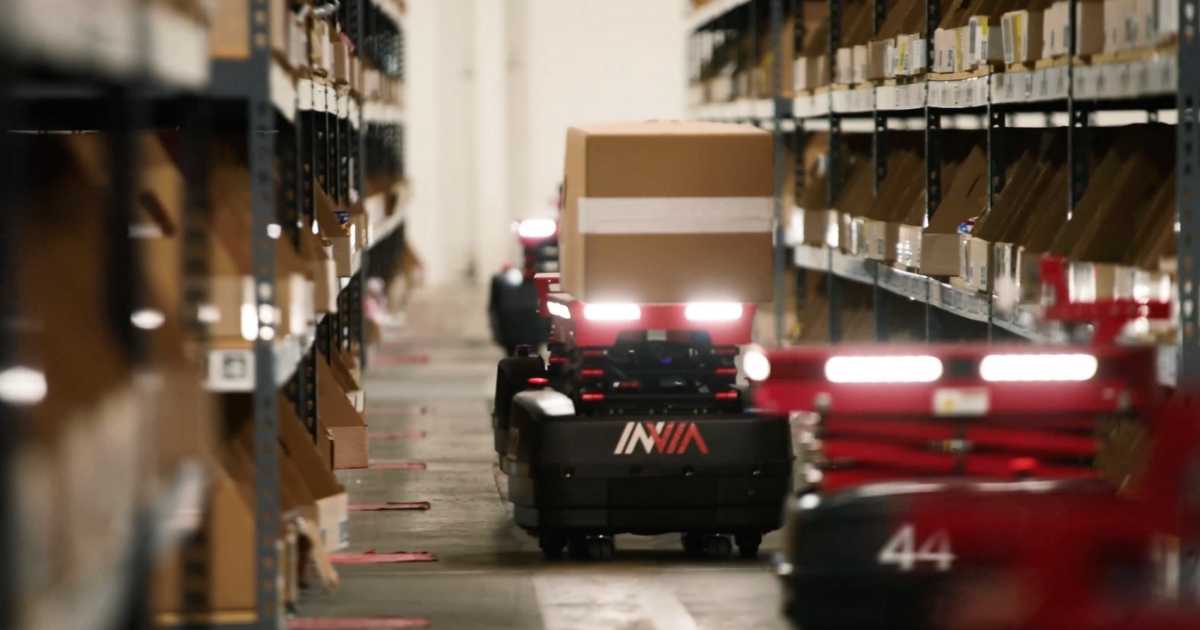
A reputable 3PL does not just store your products. It manages your inventory according to the method that best protects your brand and serves your customers.
a2b's WMS tracks inventory by lot number, receipt date, and expiration date, enabling accurate and automatic FIFO rotation across all product categories that require it. Real-time reporting and analytics give brands full visibility into their stock levels, lot status, and inventory age, so nothing expires undetected on a shelf.
For industries like food and beverage, supplements, and health and beauty, a2b has 24 years of deep expertise. These industries require FIFO enforcement. Built into the operational standard.
Conclusion
FIFO and LIFO are fundamentally different approaches to inventory rotation and accounting, and the right choice depends on what you sell, where you sell it, and how you need to report your financials. For most eCommerce brands, especially those handling date-sensitive or perishable products, FIFO is the clear operational and regulatory standard. If you are ready to work with a fulfillment partner that enforces FIFO by default and gives you real-time visibility into every lot and expiration date, a2b is built for that.
Contact a2b Fulfillment to learn how we protect your inventory, your brand, and your customers.
FAQs
Is FIFO or LIFO better for eCommerce businesses?
For most eCommerce brands, especially those selling consumable or perishable products, FIFO is the better choice. It prevents waste, ensures product freshness, and is compliant with both U.S. and international accounting standards.
Does my 3PL choose my inventory method for me?
Your 3PL handles the physical inventory rotation. Most, including a2b, use FIFO as their operational standard for date-sensitive products. The accounting method, meaning how you value inventory on your books, is a separate decision made with your accountant.
Can I switch from LIFO to FIFO?
Yes, but switching carries accounting implications and typically requires IRS notification in the U.S. Consult your CPA before making the switch. They can walk you through the tax impact and any reporting adjustments required.
About the Author
Sarah Smith is Vice President of Marketing at a2b Fulfillment, where she leads brand strategy, content, and sales enablement for one of the industry's most operationally focused third-party logistics providers. With more than 10 years of experience spanning marketing and logistics, Sarah brings a ground-level understanding of what eCommerce brands need from a fulfillment partner. Her writing covers 3PL technology, DTC and B2B fulfillment operations, supply chain strategy, and the evolving demands of modern eCommerce.