

- Blog 1: Built to Move: How American Supply Chain and Logistics Powered 250 Years of Growth
- Blog 2: Click, Ship, Repeat: How America Invented the Ecommerce Era and Changed Global Commerce
- Blog 3: The Road Ahead: Navigating Complexity and Planning for the Next Era of American Logistics
- Blog 4: The Next Frontier: Humanoid Robotics, AI, and Why America's Best Days in Logistics Are Ahead
The Road Ahead
Navigating Complexity and Planning for the Next Era of American Logistics
Strength is not static. The same McKinsey report that celebrates 250 years of American competitive advantage is also unflinching about the challenges ahead. A mounting national debt, aging infrastructure, workforce shortages in critical trades, and intensifying competition from China in key technology sectors are not hypothetical risks. They are present realities that demand honest assessment and strategic action.
The good news, and there is genuine good news, is that this is not new territory for the United States. This is a country that has faced existential disruptions before: a Civil War, two World Wars, the Great Depression, the oil shocks of the 1970s, and the offshoring wave that hollowed out manufacturing communities in the 1990s and 2000s. In each case, America found a way to adapt, reinvent, and emerge more competitive than before. The question for 2026 and beyond is whether the institutions, the will, and the talent are in place to do it again.
The Workforce Challenge

The most immediate pressure point for the logistics industry is labor. McKinsey's research finds that vacancies in construction, logistics, and utilities have more than doubled over the past few decades. More than half of US construction firms reported project delays due to worker shortages in 2024. In a capital-intensive industry where warehouses are getting larger and more complex, and where fulfillment speed is the competitive differentiator, labor gaps are an operational crisis.
The aging workforce compounds the problem. Nearly 20 percent of the workforce in construction-related trades is over 55, and that number is growing. The pipeline of younger workers entering logistics, warehousing, and supply chain roles has not kept pace with retirements. Technical skills in areas like robotics maintenance, warehouse management systems, and transportation management software are in particularly short supply.
The response to this challenge has to be multi-layered. It includes investment in vocational training programs that prepare workers specifically for logistics and supply chain careers. It includes company-level commitments to training and advancement, making logistics a career rather than just a job. And it includes, increasingly, the deployment of automation technologies not to replace workers but to extend the productive capacity of the workers who are available.
The companies that win the next decade of logistics will be the ones that solve the people problem, not just the technology problem.
Infrastructure at a Crossroads
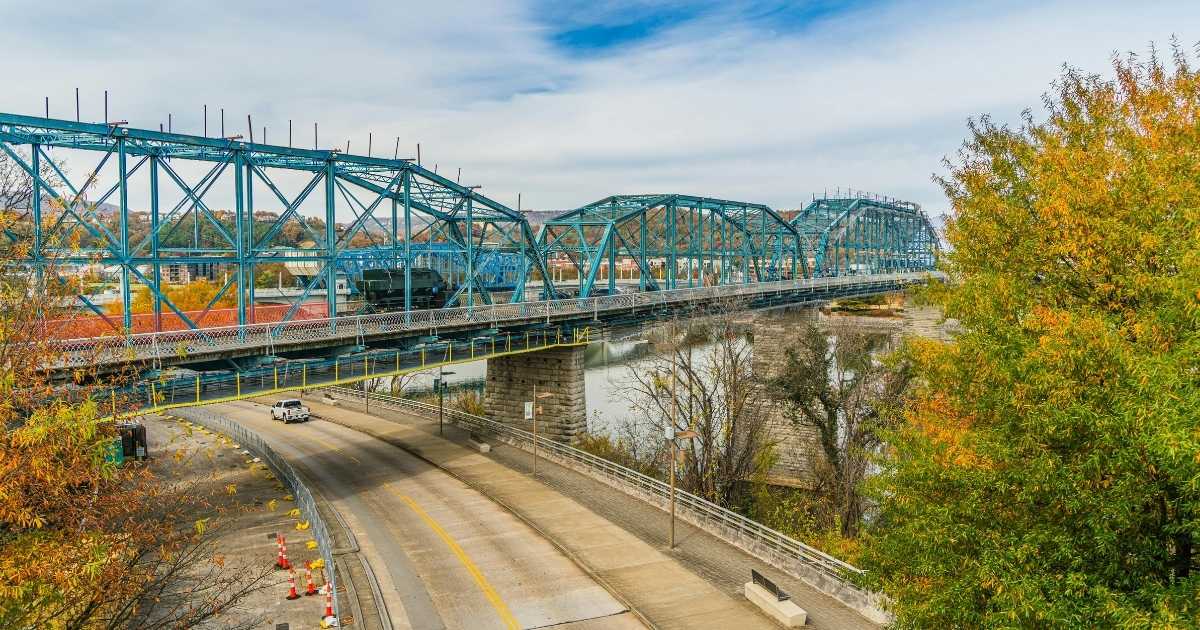
American infrastructure is showing its age. The American Society of Civil Engineers' 2025 report card gave US infrastructure its highest-ever grade, a C, which is both encouraging and sobering. McKinsey estimates that $7.2 trillion in infrastructure investment is needed over the next decade to restore basic systems to good working order.
For logistics specifically, the implications are significant. Aging highways, bridges approaching the end of their design lives, ports that need modernization to handle larger vessels and higher volumes, and rail networks that require ongoing investment to maintain their status as the world's longest freight railroad network: these are not abstract policy concerns. They are operational constraints that affect delivery times, transportation costs, and the ability of American businesses to compete globally.
The recent momentum in federal infrastructure spending is a positive step. If current trends hold, McKinsey projects that investment will cover approximately 60 percent of total expected needs. That is meaningful progress, but it also means roughly 40 percent of the gap remains unfunded. For the logistics industry, that gap translates into real costs: detours around weight-restricted bridges, inefficient port operations, and rail bottlenecks that extend transit times.
The business community cannot wait for public investment to solve these problems on its own timeline. Companies with the scale to do so are investing in their own infrastructure, building new distribution centers in strategic locations, upgrading loading dock capabilities, and partnering with carriers to improve network efficiency. The companies that treat infrastructure constraints as a fixed limitation will be outcompeted by those that find ways to work around them or work with partners who have.
The Geopolitical Supply Chain

The supply chain disruptions of 2020 through 2022 were a forcing function for something supply chain professionals had been saying for years: geographic concentration of manufacturing is a vulnerability. When a single region accounts for the majority of production for critical goods, any disruption, whether a pandemic, a geopolitical conflict, or a natural disaster, cascades across the entire global supply chain.
American companies have spent the past several years in various stages of supply chain diversification. Nearshoring, the practice of moving production or sourcing closer to the US market, has accelerated. Mexico has become one of the fastest-growing manufacturing destinations for American companies, and domestic manufacturing investment has increased in categories ranging from semiconductors to pharmaceuticals to consumer goods.
McKinsey's research notes that today, roughly 40 percent of US imports, worth more than $1 trillion, are considered critical to supply chain resilience and national economic security. That framing represents a fundamental shift in how businesses and policymakers think about supply chains: not just as cost optimization exercises, but as strategic national assets.
For logistics providers, this shift creates both complexity and opportunity. Supply chains that were optimized for a single-country sourcing model now need to operate across multiple geographies, with different regulatory environments, labor markets, and transportation networks. The 3PLs that have invested in cross-border expertise, multi-modal capability, and the technology to provide visibility across complex networks are positioned to add significant value for clients navigating this new reality.
Planning for Resilience

The most resilient supply chains in the next decade will share several characteristics. They will be data-rich, with real-time visibility into inventory levels, carrier performance, and demand signals that allow for rapid adjustment when disruptions occur. They will be flexible, with multiple sourcing options, carrier relationships, and fulfillment locations that prevent a single point of failure from becoming a systemic breakdown. And they will be collaborative, with logistics providers, carriers, and technology partners working together more closely than traditional transactional relationships allowed.
American logistics providers are well-positioned to lead on all three dimensions. The United States accounts for more than half of the world's notable AI models and leads globally in R&D spending as a share of GDP. The technology being developed in American labs and startups is finding its way into logistics operations faster here than anywhere else in the world. The companies that are investing in that technology now, building the internal expertise to deploy it effectively, are building a durable competitive advantage.
None of this diminishes the scale of the challenges ahead. But it does put them in context. A nation that navigated the transition from agricultural to industrial to scientific to digital economy in 250 years, reinventing itself at each turn, has the institutional and cultural resources to navigate this transition too. The question is not whether America can adapt. History suggests strongly that it can. The question is how quickly, and who will lead the way.
The challenges ahead are real. But so is the track record. America has been here before, and it has always found a way forward.
Sources: McKinsey Global Institute, "At 250, Sustaining America's Competitive Edge," March 2026. American Society of Civil Engineers, 2025 Infrastructure Report Card. US Bureau of Labor Statistics. Associated General Contractors 2024 Workforce Survey.
About This Series
This four-part blog series was developed by a2b Fulfillment to mark the 250th anniversary of American independence and to explore the role that logistics and supply chain innovation has played in the American competitive story. Content is informed by McKinsey Global Institute's March 2026 report, "At 250, Sustaining America's Competitive Edge," as well as supporting McKinsey research and publicly available industry data.
About the Author
Sarah Smith is Vice President of Marketing at a2b Fulfillment, where she leads brand strategy, content, and sales enablement for one of the industry's most operationally focused third-party logistics providers. With more than 10 years of experience spanning marketing and logistics, Sarah brings a ground-level understanding of what eCommerce brands need from a fulfillment partner. Her writing covers 3PL technology, DTC and B2B fulfillment operations, supply chain strategy, and the evolving demands of modern eCommerce.