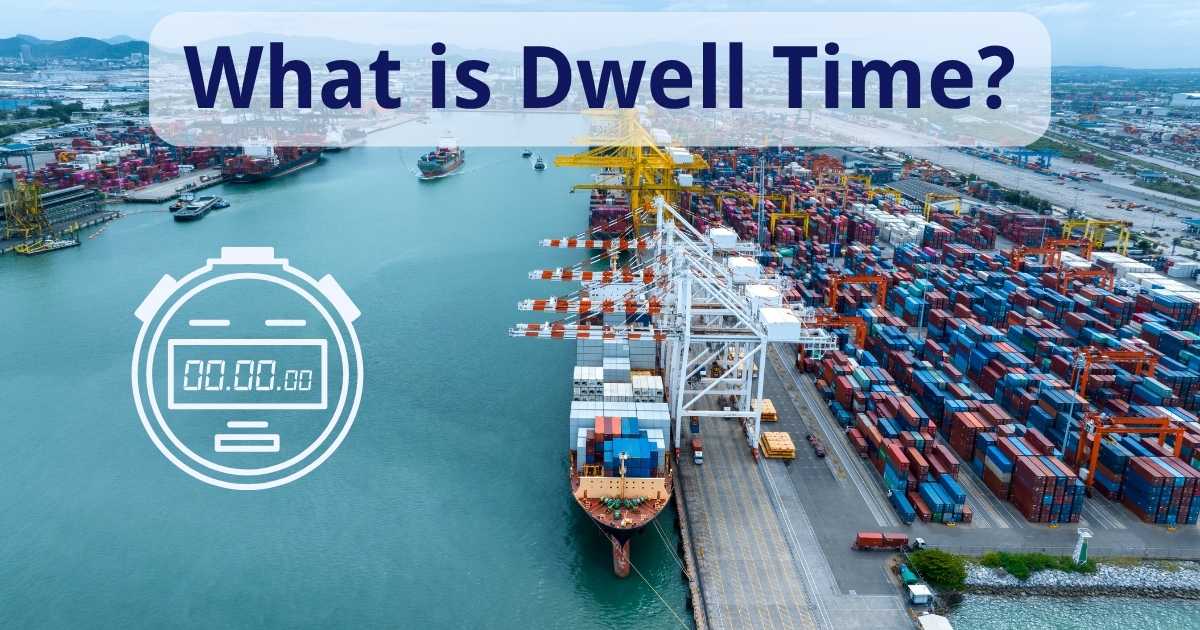


Dwell time is one of those supply chain costs that rarely shows up as a single line item but quietly drains your budget month after month. Whether it is a trailer sitting idle at your dock or a slow-moving SKU aging in a pick location, idle time in a warehouse has real financial consequences. This blog defines dwell time, breaks down what it actually costs, and covers the most effective ways to reduce it.
What Is Dwell Time and How Is It Measured?
Dwell time is the amount of time a trailer, container, or unit of inventory sits idle at a warehouse or distribution point before the next action takes place. That next action might be unloading, putaway, picking, or outbound shipping. Whatever the context, dwell time measures how long something is waiting instead of moving.
The term is used across the supply chain, but it means different things depending on who is tracking it. For carriers and shippers, dwell time typically refers to how long a trailer sits at a facility. For warehouse operators, it often refers to how long inventory remains in a location before it ships. Both matter, and both should be tracked.
Common units of measurement depend on the context. Trailer and container dwell is usually measured in hours. Inventory dwell is measured in days or weeks. Many 3PLs and carriers track dwell time as a standing KPI alongside throughput, dock-to-stock cycle time, and inventory turnover.
How to calculate trailer dwell time:
Trailer Dwell Time = Departure Timestamp - Arrival Timestamp
Example: A truck arrives at 9:00 AM and departs at 12:30 PM. Dwell time = 3.5 hours. Free time is typically 2 hours, so 1.5 hours of detention fees apply.
Inventory Dwell Time vs. Trailer Dwell Time
Inventory dwell time measures how long a SKU sits in the warehouse between receipt and shipment. It is closely tied to inventory turnover and is an early warning sign of aging stock, overbuying, or demand forecasting problems.
Trailer and container dwell time measures how long a truck or container sits on-site before being unloaded and released. This is where detention and demurrage fees accumulate. Dock dwell time is a subset of this: the time freight spends on the dock before being moved to a storage location or loaded for outbound.
Tracking all three separately matters because each points to a different root cause. High trailer dwell time usually signals a dock scheduling or labor problem. High inventory dwell time usually signals a demand, slotting, or sales issue. Combining them into a single metric obscures where the real problem is.
Why Does Dwell Time Quietly Drain Your Budget?

Dwell time rarely appears as a single line item on an invoice, which is exactly why it goes unmanaged for so long. The costs are real and significant, but they are spread across detention charges, labor inefficiency, inventory carrying costs, and customer-facing outcomes.
- Direct costs. Carriers typically allow a free window of two hours for loading or unloading. After that, detention fees kick in at roughly $50 to $100 per hour. For ocean containers, demurrage fees at the port range from $75 to $300 per container per day. Some companies report detention costs reaching $2,000 to $5,000 per container when delays extend well beyond free time. The Federal Motor Carrier Safety Administration estimates that excessive dwell time costs trucking companies approximately $3 billion per year across the industry. (Sources: project44; Bluegrace Logistics; Terminal Industries)
- Indirect costs. Beyond fees, dwell time creates labor inefficiency: staff waiting on delayed trucks, overtime to clear backlogs, and interrupted workflows. It also ties up working capital in slow-moving inventory, which creates a cash-flow drag. The longer goods sit, the greater the risk of damage, obsolescence, or shrinkage. And dock congestion from one delayed truck ripples forward, disrupting the schedule for every subsequent inbound and outbound shipment that day.
- Customer-facing costs. When inbound freight stalls, outbound fulfillment slows down. That means delayed orders, missed SLAs, backorders, and stockouts. For DTC and e-commerce brands, those outcomes translate directly into negative reviews and customer churn. For brands selling into big-box retail, OTIF (On-Time In-Full) failures can trigger costly chargebacks.
The Compounding Effect on Supply Chain Performance
One delayed unload does not just affect that truck. It backs up the dock, delays putaway for that inventory, pushes back pick availability, and compresses the window for outbound shipments later in the day. The bottleneck compounds at every stage downstream.
For brands selling into retail, this is especially consequential. Retailers measure On-Time In-Full (OTIF) performance closely. A single fulfillment delay caused by upstream dwell problems can result in a chargeback that far exceeds the original detention fee that triggered the chain of events.
How Can You Reduce Dwell Time in Your Warehouse?

Reducing dwell time requires addressing both the scheduling and the systems that support it. A few of the most effective levers:
Dock scheduling and appointment systems. Pre-booked arrival windows prevent yard congestion and reduce the chance that trucks are waiting for an open dock. This alone can significantly cut trailer detention exposure.
Warehouse Management System (WMS) adoption. A WMS provides real-time visibility into inbound advance ship notices (ASNs), putaway task queues, and slot availability. It eliminates the manual coordination gaps that cause freight to sit longer than necessary.
Slotting optimization. Placing high-velocity SKUs in accessible locations reduces handling time and accelerates inventory turnover. Slow movers stored in prime locations create unnecessary congestion and drag on receiving workflows.
Labor planning. Matching staffing levels to inbound and outbound volume forecasts prevents the overtime scrambles and idle periods that inflate both labor costs and dwell time. Cross-trained teams that can flex between receiving and shipping are especially valuable during peak periods.
Cross-docking. Where the product mix and velocity allow, moving freight directly from inbound to outbound without a putaway step eliminates inventory dwell entirely for fast-moving goods.
Data and KPIs. Dwell time should be tracked as a standing KPI alongside dock-to-stock time, inventory turnover, and order cycle time. You cannot manage what you do not measure, and facilities that track dwell time consistently are better positioned to catch problems before they compound.
Carrier and supplier coordination. Standardizing ASNs, paperwork, and loading practices with your inbound carriers and suppliers reduces the unexpected delays that create dock congestion. When every party knows what to expect, turnaround times improve across the board.
When It Makes Sense to Partner With a 3PL
For brands running in-house fulfillment near capacity, dwell time is often a symptom of a larger infrastructure problem. A 3PL with established dock scheduling, a modern WMS, and labor flexibility typically achieves lower dwell time than an in-house operation stretched thin.
a2b Fulfillment combines robotics and automation with multi-client warehouse efficiency across facilities in Georgia, Pennsylvania, and Utah. That infrastructure, combined with experienced receiving and inventory management teams, keeps freight moving quickly from dock to storage to outbound shipment, with minimal idle time at any stage.
Stop Paying for Idle Time
Dwell time is a manageable cost, but only if you are actively tracking and addressing it. The right combination of scheduling, technology, labor planning, and fulfillment infrastructure can significantly reduce idle time across your supply chain and protect both your margins and your customer relationships.

Contact a2b Fulfillment today to learn how our fulfillment and warehousing solutions help brands reduce dwell time, cut detention exposure, and ship faster.
Frequently Asked Questions
What is a good dwell time benchmark for warehousing?
It depends on the context. For trailer dwell, staying under two hours typically avoids detention fees. For inventory dwell, the goal is to align with your industry's average inventory turnover. For faster-moving categories like e-commerce consumables, most SKUs should ship within 30 to 60 days of receipt.
What is the difference between dwell time and detention?
Dwell time is the total period a trailer, container, or product sits idle. Detention is specifically the fee a carrier charges once a trailer sits past the allotted free time, typically two hours. Detention is one financial consequence of excessive dwell time, not the same thing.
Can technology actually reduce warehouse dwell time?
Yes. A modern WMS, dock scheduling software, and real-time inventory visibility reduce the manual coordination gaps that let dwell time accumulate. Most warehouses see measurable improvements within the first few months of implementation.
Sources
project44: What Is Detention Cost in Supply Chain?
Arrivy: How to Reduce Dwell Time and Boost Warehouse Throughput
Bluegrace Logistics: Detention and Dwell Times: The Menaces of Supply Chain Efficiency
Terminal Industries: Detention and Demurrage: Key Shipping Fees Explained Clearly
SkyBitz: Demurrage vs Detention: Charges, Meaning& How to Avoid
GPX: How to Reduce Dwell Time and Drive Supply Chain Efficiency in 2026
ShippingRates.org: Demurrage & Detention Guide 2026