.webp)


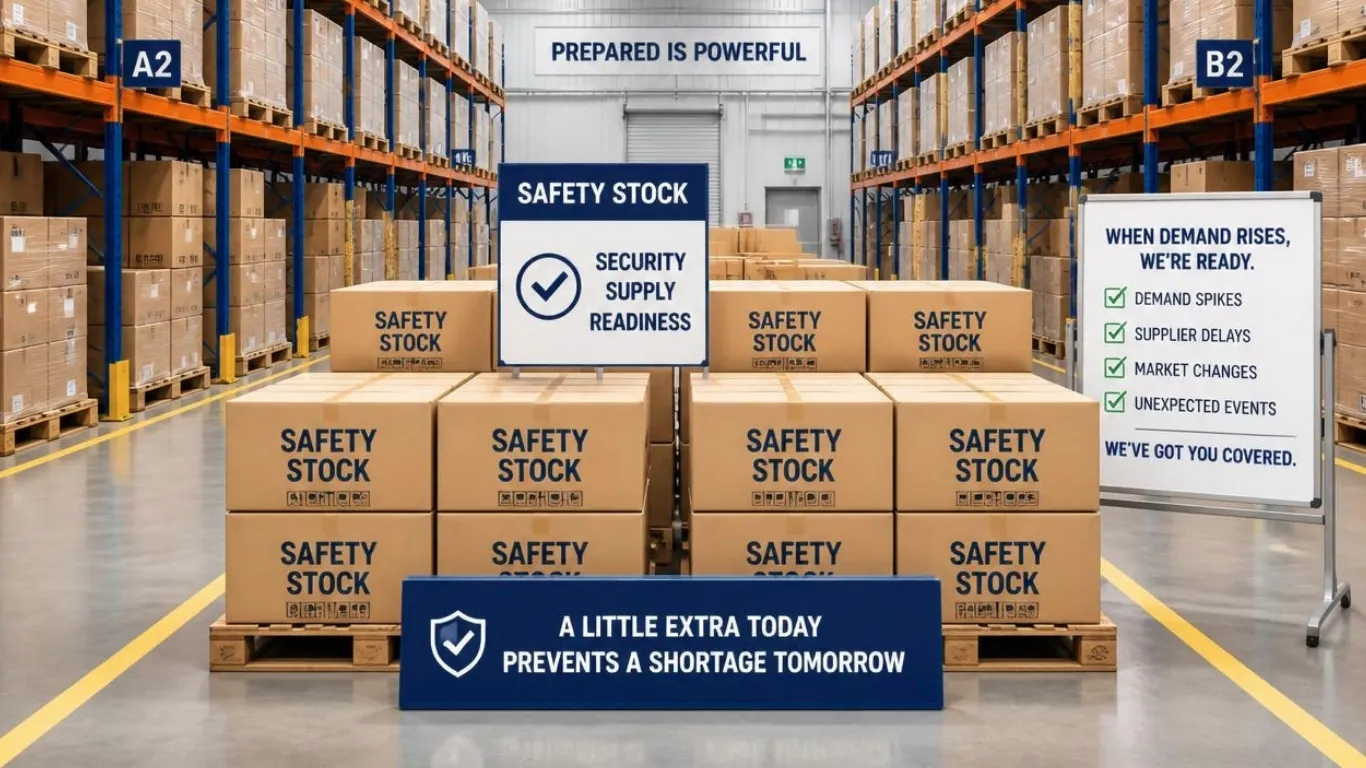
Ordering too much inventory at once inflates your storage costs. Ordering too little means you are placing orders constantly, each one adding freight, labor, and administrative overhead. The EOQ formula is the mathematical tool that finds the order size that minimizes both problems at the same time. This blog explains what EOQ is, breaks down each variable in the formula, walks through a real example, and shows how a 3PL partner can help you put it into practice.
What Is the Economic Order Quantity (EOQ) Formula?
EOQ stands for Economic Order Quantity. It is an inventory management formula that calculates the ideal order size to minimize the combined cost of placing orders and holding inventory in storage. Order the right quantity at the right frequency, and you stop overpaying on both ends.
The concept was developed by Ford W. Harris in 1913, and the resulting EOQ model has remained one of the most widely used inventory optimization models in supply chain management for over a century. The core insight behind the economic order quantity model has not changed: there is a mathematically optimal order size for every product, and most companies are not hitting it.
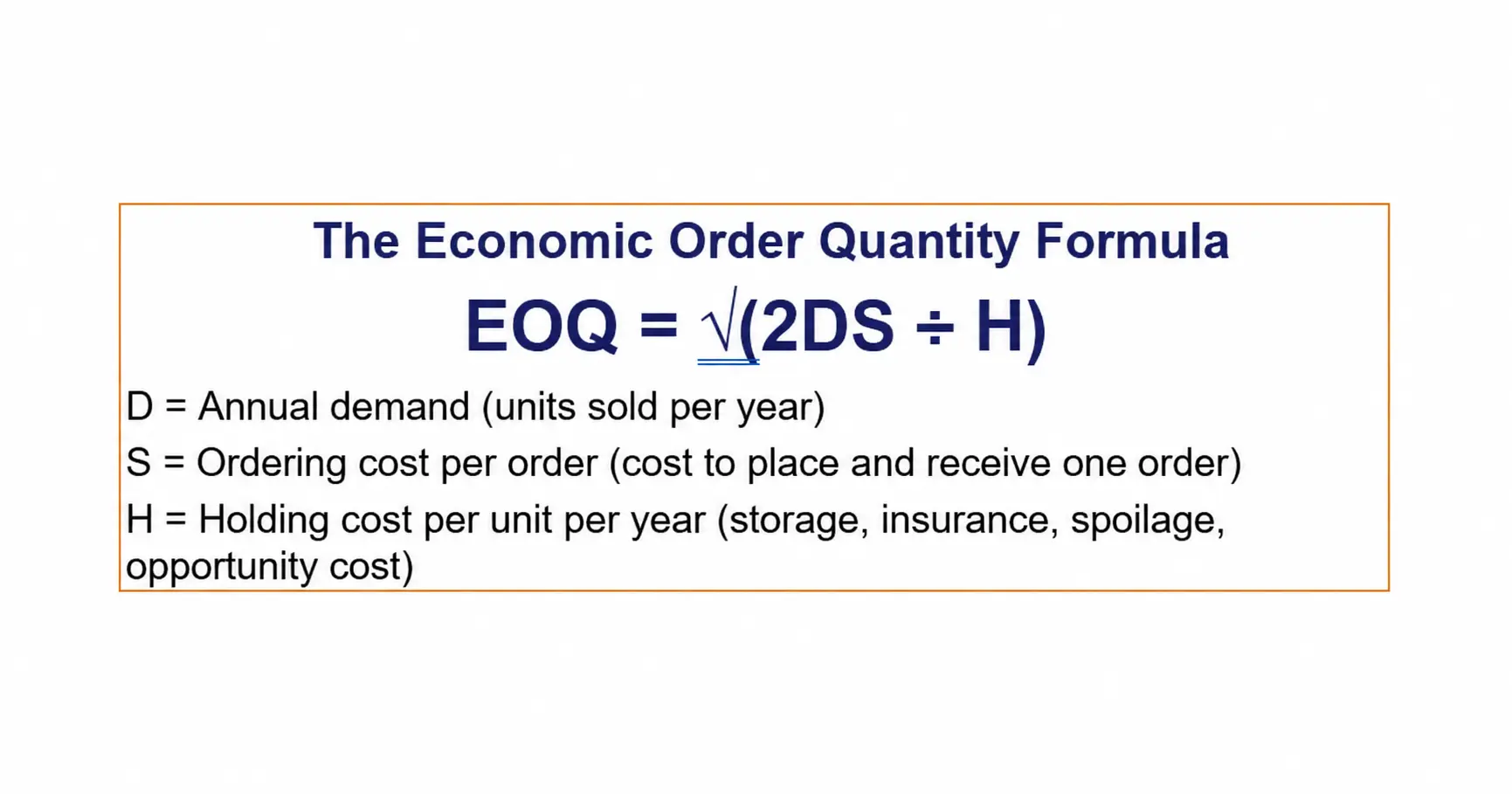
In plain language: EOQ finds the order size at which the cost of ordering frequently and the cost of holding large amounts of stock balance out and are minimized together. The result is a single number: the quantity to order each time you restock a given SKU.
Breaking Down the EOQ Formula: What Goes Into Each Variable?

The formula is straightforward, but the quality of your inputs determines the quality of your output. Here is what each variable represents and where to find the numbers.
D: Annual Demand
Annual demand is the total number of units you expect to sell or consume in a year. For established products, use historical sales data. For newer SKUs, use market research or early sales velocity as a starting projection.
Accuracy matters here. EOQ is only as good as the demand estimate behind it. A 3PL with strong reporting tools makes pulling accurate, SKU-level demand data straightforward rather than a manual exercise.
One important caveat: EOQ assumes relatively stable customer demand. Brands with significant seasonal swings should calculate separate EOQ figures for peak and off-peak periods rather than relying on a single annual average.
S: Ordering Cost
Ordering cost is what it costs you every time you place a replenishment order, not the cost of the goods themselves. It includes purchase order processing, inbound freight and shipping, receiving labor, quality inspection, and any administrative overhead involved in placing and processing a single order.
Most brands underestimate this figure when they first calculate it. Adding up all the real costs associated with a single order event often produces a higher number than expected, which in turn shifts the EOQ result toward less frequent, larger orders.
H: Holding (Carrying) Cost
Holding cost is what it costs to keep one unit of inventory in storage for one full year. It includes warehouse storage fees, insurance, shrinkage and loss, the risk of product obsolescence or expiration, and the opportunity cost of capital tied up in unsold stock.
As a rule of thumb, holding costs typically run between 20% and 30% of total inventory value annually, though this varies significantly by industry and product type. For brands using a 3PL, storage fees billed per pallet position, per cubic foot, or per square foot of storage space make this cost relatively easy to calculate at the unit level with data directly from your fulfillment partner, and that clarity is what keeps total inventory costs, not just ordering costs, in check.
Calculate EOQ Example: Putting It into Practice
Here is a concrete example using a common e-commerce scenario.
Scenario: An e-commerce brand sells a health supplement with the following inputs:
Annual demand (D): 12,000 units
Ordering cost (S): $150 per order
Holding cost (H): $3.00 per unit per year
The Calculation

What this tells the brand: they should order approximately 1,095 units each time they restock. Ordering 3,000 units at a time would reduce how often they order but would inflate storage costs significantly. Ordering 500 units at a time would keep storage lean but would require placing 24 orders of the same quantity per year instead of 11, driving up ordering costs.
At the EOQ of 1,095 units, the brand places roughly 11 orders per year (12,000 ÷ 1,095), or about one per month. Both ordering costs and holding costs are minimized at this quantity.
One important pairing: EOQ tells you how much to order each time. Combine it with a reorder point (ROP) calculation to know when to place each order, so you are not guessing on either dimension.
How Does EOQ Help Cut Storage Costs?
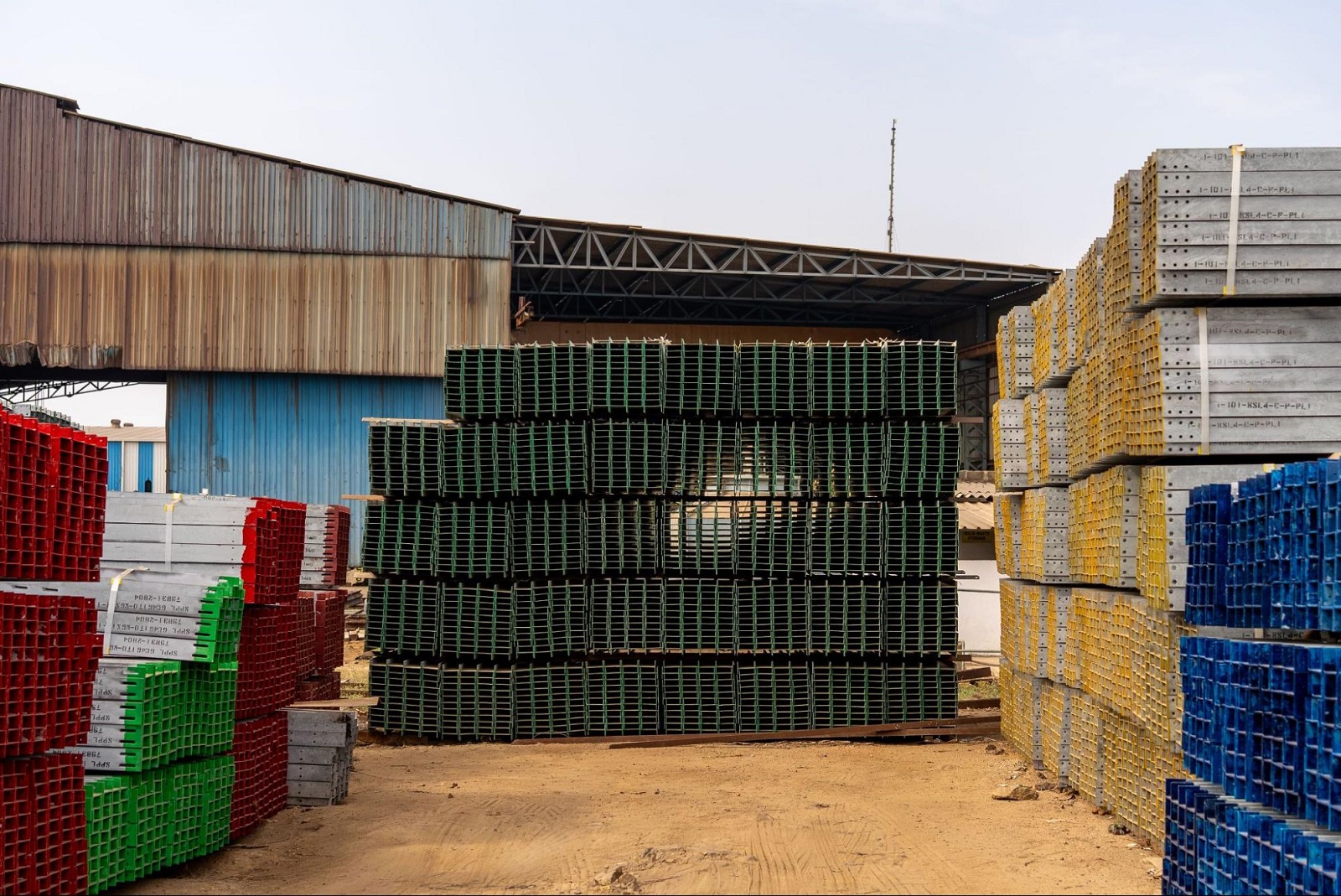
Overstocking is one of the most common and costly mistakes in e-commerce inventory management. Brands that order in large batches to capture bulk discounts often pay far more in storage fees than they save on per-unit cost. EOQ counteracts this by identifying the order size at which storage costs and ordering costs are equal and minimized together.
In practice, this means smaller, more frequent orders that keep less stock sitting in the warehouse at any given time. Less inventory on hand means lower storage fees paid to your 3PL, less capital tied up in unsold goods, and less risk of dead stock or expiration write-offs on products that age out before they ship.
There is an operational benefit as well. More predictable inventory levels make receiving, putaway, and pick-and-pack workflows smoother and more consistent. Large, irregular inbound shipments create spikes that strain labor and dock capacity. EOQ-based ordering smooths out those spikes.
For brands storing inventory with a 3PL where storage is billed per pallet position or cubic foot per month, even a modest reduction in average inventory volume can produce meaningful savings each month. The formula does not require perfection to deliver results; even a rough EOQ estimate is better than guessing.
How Does a 3PL Help You Apply the EOQ Formula?
EOQ is only as accurate as the data behind it. That is where a strong 3PL partner makes a real difference.
Accurate holding cost data. a2b Fulfillment provides clear, itemized storage cost reporting, which makes it straightforward to calculate a true per-unit holding cost. That number is the H variable in your EOQ calculation, and knowing it precisely makes the entire formula more reliable.
Real-time demand visibility. a2b's reporting and analytics tools give brands live inventory data and historical sales velocity by SKU. That is the foundation of an accurate annual demand estimate, the D variable, which has the largest influence on the EOQ result.
WMS-powered inventory tracking. a2b's Warehouse Management System tracks inventory levels in real time, making it practical to set automated reorder triggers that align with both EOQ-based order quantities and reorder point calculations. That combination takes the guesswork out of when and how much to order.
Scalability. As order volumes grow and SKU counts expand, a2b's technology and operations scale with the business. Inventory stays lean, and storage costs stay controlled without sacrificing fulfillment speed or accuracy.
Start Ordering Smarter
The EOQ formula is not complicated, but it requires good data to work well. Pair it with accurate demand history, honest ordering cost accounting, and reliable holding cost figures from your 3PL, and it becomes one of the most practical tools in inventory management. Get those inputs right, and you will order the right amount at the right time, consistently, with less waste and lower storage costs.
Contact a2b Fulfillment today to learn how our reporting, analytics, and fulfillment infrastructure can give you the data you need to put EOQ to work.
Frequently Asked Questions
What does EOQ stand for?
EOQ stands for Economic Order Quantity. It is an inventory management formula that calculates the optimal order size to minimize the combined costs of ordering and holding inventory.
What are the three variables in the EOQ formula?
The EOQ formula uses three inputs: D (annual demand in units), S (the cost of placing a single order), and H (the holding or carrying cost per unit per year). The formula is EOQ = √(2DS ÷ H).
How often should I recalculate EOQ?
Recalculate EOQ whenever your demand patterns, ordering costs, or holding costs change meaningfully. At a minimum, review it annually or at the start of each peak season to make sure you are not working from outdated inputs.
Does EOQ work for businesses with seasonal demand?
EOQ assumes relatively stable demand, so a single annual calculation may not be accurate for highly seasonal products. The better approach is to calculate separate EOQ figures for peak and off-peak periods using demand estimates specific to each season.
What is the difference between EOQ and reorder point (ROP)?
EOQ tells you how much to order each time you restock. Reorder point (ROP) tells you when to place that order, based on your lead time and daily demand. The two formulas work together: EOQ sets the order quantity, ROP sets the trigger.