

Fulfilling food and beverage orders is a different game than shipping apparel or housewares. The stakes are higher, the rules are stricter, and the margin for error is slim. This guide explains why food and beverage fulfillment is complex, how a2b Fulfillment handles it, and what full 3PL support looks like for brands.
Table of Contents
- What Makes Food and Beverage Fulfillment Different from Standard Fulfillment?
- How Does a2b Fulfillment Handle Food and Beverage Storage and Warehousing?
- End-to-End 3PL Services for Food and Beverage Brands: From Receiving to Delivery
What Makes Food and Beverage Fulfillment Different from Standard Fulfillment?

Most 3PLs focus on handling general consumer goods. Food and beverage brands need more than general.
The risks in this product category are not on a standard fulfillment checklist. Spoilage, contamination, temperature control, and expiration date tracking all need dedicated systems and protocols. Add FDA oversight, Good Manufacturing Practices (GMP), and food safety labeling rules. The regulatory environment alone is a big lift.
Packaging adds another layer. Food products must hold up during transit without losing quality. A damaged shipment is more than a customer service issue. In some cases, it's a health and safety issue.
Consumer expectations in this category are also unforgiving: freshness and delivery speed aren't nice-to-haves. They're baseline.
A standard 3PL may lack FDA registration, food-safe storage protocols, or any real experience with lot tracking and inventory rotation. That gap is exactly where things go wrong for food and beverage brands trying to scale.
Key Unique Challenges in Food and Beverage Fulfillment

Spoilage and shelf life management. Track products by lot number and expiration date. FIFO (First In, First Out) and FEFO (First Expired, First Out) rotation methods aren't optional. They're how you protect your customers and your brand.
Contamination prevention. Warehouse cleanliness isn't just about aesthetics. Strict pest control standards and facility hygiene protocols are foundational to any food-safe operation.
Carrier and transit considerations. Heat, humidity, and transit duration all affect product quality before a box ever hits a doorstep.
Labeling compliance. Nutritional facts, allergens, and country-of-origin disclosures must meet FDA and FTC requirements. A fulfillment partner needs to flag issues before they become violations.
How Does a2b Fulfillment Handle Food and Beverage Storage and Warehousing?
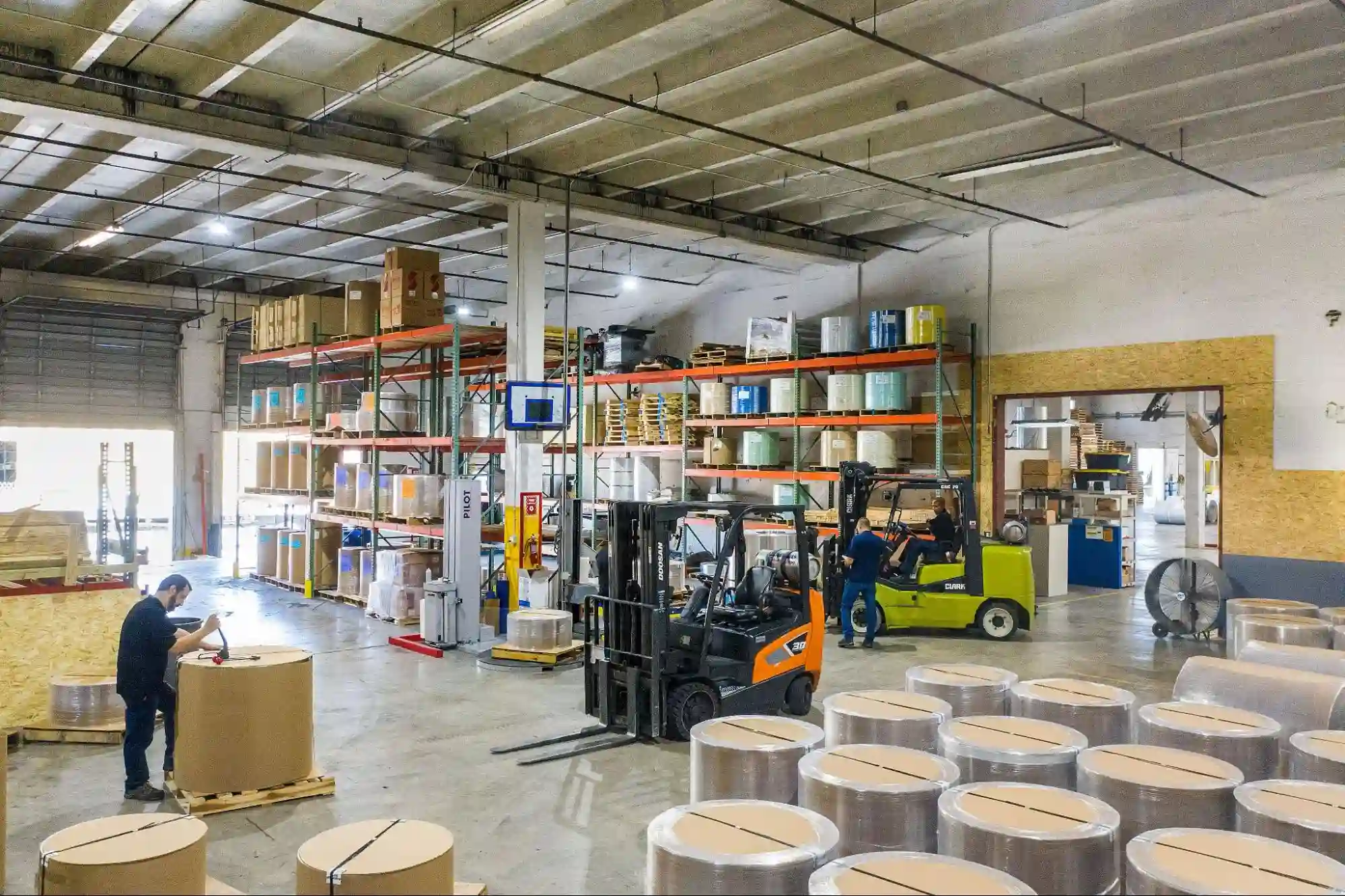
a2b operates FDA-registered fulfillment centers. This is a must for any food or beverage brand choosing a 3PL partner. GMP compliance means the warehousing environment itself meets federal food safety standards, not just the products stored in it.
With facilities in Georgia, Pennsylvania, and Utah, a2b’s network helps brands store inventory closer to their customers. Fewer shipping zones mean lower costs and faster delivery times. Both matter in a category where freshness is part of the value proposition.
Inside each facility, a2b's Warehouse Management System (WMS) provides real-time inventory visibility, lot tracking, and expiration date management. Automated Mobile Robotics (AMRs) and voice-picking technology improve pick accuracy and reduce handling risk for fragile or sensitive products. Less handling means fewer breaks, leaks, and damaged shipments.
End-to-End 3PL Services for Food and Beverage Brands: From Receiving to Delivery
.jpg)
The fulfillment lifecycle for food and beverage brands covers a lot of ground: receiving, storage, order processing, pick and pack, shipping, and returns. Each stage requires more precision than a standard fulfillment operation.
Speed matters here more than most categories. Food and beverage consumers expect Amazon Prime-level delivery, and a2b's multi-warehouse network and carrier relationships make that achievable. Discounted carrier rates and real-time rate shopping across multiple carriers reduce per-shipment costs without sacrificing delivery windows.
Value-Added Services designed for food brands include custom kitting for subscription boxes, gift sets, and bundle packs; branded pack-out with inserts and cold packs; and assembly for multi-component products.
Returns processing for food-adjacent products requires documentation and careful handling. Items that cannot be resold still need to move through a defined reverse logistics process for regulatory purposes. a2b has built that infrastructure.
Scalability is built in. Seasonal demand spikes, gifting surges, and subscription box launches all require the ability to move fast without compromising accuracy. a2b can scale up quickly when volume demands it.
Onboarding is straightforward. The process runs: discovery session, WMS setup and platform integration, inventory receiving, and go-live. It's designed to get food brands operational quickly without a months-long ramp.
Shipping Strategies to Protect Freshness and Reduce Cost
Strategic multi-warehouse inventory placement is one of the most effective tools available to food brands. Fewer transit days between the warehouse and the customer means fresher product and lower exposure to temperature and humidity risk.
Cartonization technology selects the optimal box size for each order, reducing product movement inside packaging during transit. Less movement means fewer damaged shipments.
Carrier rate shopping at the time of shipment ensures the best combination of speed and cost, and expedited carrier agreements are available for perishable or time-sensitive SKUs.
Wrapping Up
Food and beverage fulfillment requires a partner with the right infrastructure, the right certifications, and real experience in the category. a2b Fulfillment's FDA-registered facilities, GMP compliance, lot tracking capabilities, and distributed warehouse network are built specifically to handle what standard 3PLs can't. If you're ready to scale your food or beverage brand without compromising on freshness, accuracy, or compliance, let's talk.
Frequently Asked Questions
What does it mean for a warehouse to be FDA registered?
FDA registration means the facility has been officially registered with the U.S. Food and Drug Administration as a food facility, confirming it meets minimum federal standards for safely storing and handling food products. For food and beverage brands, working with an FDA-registered 3PL is a baseline requirement, not a bonus.
Can a2b Fulfillment manage lot tracking and expiration dates for my products?
Yes. a2b's Warehouse Management System tracks inventory by lot number and expiration date and applies FIFO and FEFO rotation methods to ensure older inventory ships first. This protects your customers from receiving products close to or past expiration.
How does outsourcing food and beverage fulfillment to a 3PL save money?
By partnering with a2b, brands avoid the capital costs of leasing and operating a warehouse, hiring and training fulfillment staff, and investing in WMS technology. You pay for what you use and scale as your volume grows, without carrying fixed infrastructure costs.
About the Author
Sarah Smith is Vice President of Marketing at a2b Fulfillment, where she leads brand strategy, content, and sales enablement for one of the industry's most operationally focused third-party logistics providers. With more than 10 years of experience spanning marketing and logistics, Sarah brings a ground-level understanding of what eCommerce brands need from a fulfillment partner. Her writing covers 3PL technology, DTC and B2B fulfillment operations, supply chain strategy, and the evolving demands of modern eCommerce.